

What if a sickness absence medical assessment could help turn uncertainty about stress and work into a clearer plan? When stress has made it difficult to work, it’s understandable to wonder what an assessment involves, what information you’ll be asked to share and whether the process will feel intrusive.
A thoughtful assessment isn’t about rushing someone back or deciding an employment outcome. It can explore how health affects day-to-day work, identify questions that need careful consideration and help make support needs easier to discuss. The employee’s wellbeing should remain central throughout.
This guide explains the purpose and limits of an occupational health assessment, what information may be useful to prepare and how practical adjustments could contribute to a sustainable return-to-work approach. GP Plus provides occupational health assessments, with longer appointment times for careful investigation and personalised care. This allows space to listen to individual concerns and consider them in context.
Key Takeaways
- A sickness absence medical assessment can explore how stress, health and work circumstances relate, without treating the discussion as a pass-or-fail test.
- Preparing relevant information and questions can help you explain what is affecting work and what support you may need.
- An occupational health assessment, fit note and workplace conversation serve different purposes. Understanding the distinction can help you identify the right next step.
- Guidance may help shape a return-to-work discussion around practical options, such as reviewing duties, workload or communication.
- Attentive listening and individual clinical consideration can help turn complex health concerns into clearer, more manageable next steps.
What Is a Sickness Absence Medical Assessment for Stress?
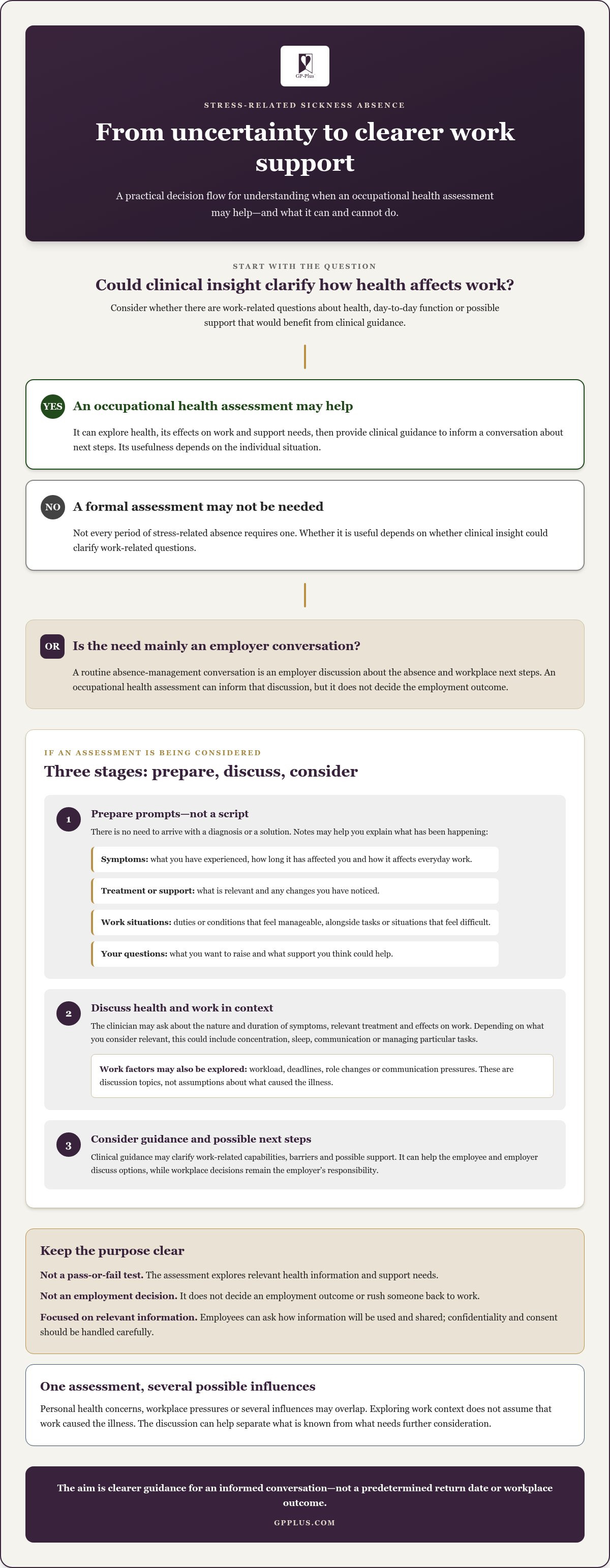
A sickness absence medical assessment is a clinical discussion about an employee’s health, its effects on work and any support that may help. It isn’t a pass-or-fail test or a shortcut to an employment decision. The aim is to clarify relevant health information so the employee and employer can have a more informed conversation about next steps.
Stress-related absence can have different contributing factors. Personal health concerns, workplace pressures or several influences may overlap. Exploring work context doesn’t assume that work caused the illness. It can help establish whether particular duties, demands or working arrangements affect the person’s ability to manage their health or consider a return.
Psychosocial hazards and work-related stress describes how aspects of work design, organisation and management can contribute to stress and health concerns. Considering these factors can be useful when relevant, while recognising that each person’s circumstances are individual.
An occupational health assessment explores health and work-related support needs. A routine absence-management conversation is an employer discussion about the absence and workplace next steps. The assessment can inform that conversation, but it doesn’t decide the employment outcome or replace the employer’s consideration of the circumstances.
What can a stress-related medical assessment explore?
The clinician may discuss the nature and duration of symptoms, relevant treatment and the effect of the health concern on day-to-day work. Depending on what the employee considers relevant, this could include concentration, sleep, communication or managing particular tasks. The focus is on how health affects function and support needs, not on collecting unnecessary personal details.
Work demands may also be explored. Workload, deadlines, changes to a role or communication pressures could be relevant barriers to recovery or returning to work. These are topics for discussion, not assumptions about the cause of someone’s illness. A careful conversation can separate what is known from what needs further consideration.
Who may find an assessment useful?
An assessment may help an employee who wants clearer guidance about support during or after sickness absence, particularly when the effects of stress on work are difficult to explain. Managers and HR professionals may also find clinical guidance useful when preparing for a workplace discussion and considering possible support.
Not every period of stress-related absence requires a formal medical assessment. Whether one is useful depends on the individual situation and whether clinical insight could clarify work-related questions. GP Plus provides occupational health assessments, with longer consultations that allow time to listen carefully and consider health concerns in context. The aim is clearer guidance for discussion, not a predetermined return date or employment decision.
How Does a Sickness Absence Medical Assessment Work?
A sickness absence medical assessment usually involves preparation, a clinical discussion and considered guidance about possible next steps. The format and information explored depend on the employee’s circumstances and the questions the assessment is intended to address. The assessment brings relevant health and work information together and applies clinical judgement to inform next steps, without guaranteeing a particular outcome.
How should an employee prepare for the assessment?
Some preparation can make it easier to explain what has been happening, but there’s no need to arrive with a diagnosis or a solution. It may help to note:
- Symptoms, how long they have affected you and how they affect everyday work.
- Relevant treatment or support, and any changes you have noticed.
- Duties or working conditions you find manageable, alongside tasks or situations that feel difficult.
- Questions you want to raise and support you think could help.
Use these notes as prompts, not a script. The discussion should give the employee room to describe their experience openly, including areas of uncertainty, without pressure to reach a particular conclusion.
What happens during and after the clinical discussion?
The clinician may ask how health concerns affect work, explore relevant duties and consider what could support recovery or work participation. The conversation should stay focused on information relevant to the assessment. Employees can ask how information will be used and shared. Confidentiality and consent should be handled carefully, with any sharing considered in the context of the assessment and applicable requirements.
After the discussion, clinical guidance may clarify work-related capabilities, barriers and possible support. It can give the employer and employee a more informed basis for discussing options, but the clinician doesn’t make workplace decisions for the employer. Those remain the employer’s responsibility, taking account of individual circumstances and relevant obligations. Guidance may also identify questions that need further discussion rather than provide a single definitive answer.
Where workplace stressors are relevant, clinical guidance can sit alongside the employer’s consideration of the working environment. The HSE's Management Standards for stress provide a framework for thinking about work-related stress risks. They complement, rather than replace, an individual clinical assessment.
Follow-up depends on what the discussion identifies. It may involve reviewing support needs or continuing the workplace conversation as circumstances change, rather than following a fixed report format or timetable. GP Plus provides occupational health assessments and longer consultations for careful, personalised consideration. Explore occupational health assessments as a route to a considered clinical discussion about health and work.
Medical Assessment, Fit Note, or Workplace Conversation: What Is the Difference?
These processes can overlap, but they answer different questions. A fit note gives information about how a health condition may affect work. An occupational health assessment explores health and work-related support needs. A workplace conversation focuses on absence management and practical next steps. A sickness absence medical assessment should inform support, not act as a credibility test or an automatic instruction to return to work.
| Process | Purpose | Who is involved? | The question it helps address |
|---|---|---|---|
| Fit note | Communicates how a health condition affects fitness for work and may indicate support that could help. | An authorised healthcare professional and the employee. | How might the employee’s health affect work at this time? |
| Occupational health assessment | Provides clinical consideration of health, work function and potential support needs. | The employee and an occupational health clinician; relevant guidance may inform the employer. | What health-related barriers or support needs may be relevant to work? |
| Workplace conversation | Discusses the absence, communication, work arrangements and possible next steps. | The employee and an appropriate manager or HR representative. | What practical workplace options should be discussed? |
Is an occupational health assessment the same as a fit note?
No. They have different purposes, and one doesn’t automatically replace the other. Fit-note arrangements and terminology vary across the UK’s nations, so employees and employers should follow current guidance that applies where they work. In Great Britain, fit notes record advice about fitness for work; the recommendation is advisory and should be considered as part of a fair process. For more detail on certification, see this guide to private sick note guidance.
How does a clinical assessment differ from a manager meeting?
A clinician explores relevant health information and how it may affect work. A manager’s conversation isn’t a clinical examination. It can address communication, duties and workplace planning without seeking private medical details that aren’t relevant. Used thoughtfully, the conversations complement each other: clinical guidance can help frame practical questions while the employer considers workplace options and carries out its responsibilities. It doesn’t make the employment decision or replace any applicable statutory process.
For practical context on communication during absence and return-to-work discussions, Acas offers guidance on taking time off for work-related stress. Keeping the purpose of each process clear can help an employee feel heard and support a more considered discussion about what happens next.
How Can Assessment Guidance Support a Safe Return to Work?
Clinical guidance can turn a broad concern, such as “work feels unmanageable”, into a focused discussion about what is getting in the way and what might help. A sickness absence medical assessment may clarify how health is affecting work and identify questions for the employee and manager to consider together. It informs the conversation; it doesn’t prescribe a return date or guarantee a particular adjustment.
Any plan should draw on the employee’s experience, the manager’s understanding of the role and relevant clinical input, while protecting personal health information. The employer usually needs practical information about work-related effects and support, not every detail of someone’s private medical history. Clear boundaries around what is shared can help keep the discussion purposeful and respectful.
What support might be considered after stress-related absence?
Depending on the person’s health, role and workplace context, possible options to discuss might include:
- Temporarily reviewing particular tasks or responsibilities.
- Considering workload, deadlines or the order in which duties are resumed.
- Adjusting hours or working arrangements where appropriate.
- Agreeing a phased plan, with changes reviewed as the person’s circumstances develop.
These are examples, not standard recommendations. What is practical depends on the work involved and the employee’s needs. No specific adjustment is guaranteed to be suitable, recommended or approved. Clinical guidance can help the people involved consider options in context instead of relying on assumptions.
How can a return-to-work plan remain person-centred?
A useful plan gives everyone a shared understanding of what has been agreed, who will review it and how the employee can raise concerns. Check-ins should be clear and proportionate, with attention to wellbeing and whether support is working. They shouldn’t become a demand for unnecessary medical updates.
Flexibility matters. Symptoms, responsibilities and workplace demands can change, so a plan may need to be revisited rather than treated as fixed. If a task proves difficult or a workload change isn’t helping, a calm review can establish whether another approach should be considered. For broader context on what clinical assessment may involve, read the occupational health assessment guide.
GP Plus provides occupational health assessments, with longer consultations that allow time to consider individual health and work concerns carefully. Explore GP Plus occupational health support for a considered clinical discussion about potential support needs.
Choosing a Sickness Absence Medical Assessment That Supports People
A useful sickness absence medical assessment should leave the employee feeling heard and give the employer clearer questions to consider. Its value isn’t in producing a guaranteed answer. It lies in exploring relevant health and work concerns carefully, then offering guidance that can inform a considered plan. The assessment should support understanding, not promise a particular health result, return date or employment outcome.
What should a thoughtful assessment experience feel like?
The conversation should be professional, respectful and centred on the individual’s circumstances. The employee needs room to explain what they’re experiencing and how it affects work, without pressure to share personal details that aren’t relevant. Clear explanations and focused questions can make the purpose of the discussion easier to understand, especially when stress has made it difficult to organise or communicate concerns.
Clinical exploration should connect health information to practical work considerations. For example, it may clarify which aspects of a role feel difficult, what the employee can currently manage and where further workplace discussion could help. Guidance should be proportionate to the information available. It can identify potential next steps while leaving decisions about workplace arrangements and employment with the appropriate people.
What are the next steps for employers and employees?
Before an assessment, employees may find it helpful to note the concerns they want to explain, how these affect their work and any questions they hope to raise. Employers can prepare by identifying the specific work-related issues on which clinical guidance may help, rather than seeking a broad judgement about the person. Both approaches help keep the discussion focused and respectful.
Afterwards, clinical guidance should be considered alongside the employee’s perspective and the appropriate workplace processes. It may provide useful context for discussing support, but it isn’t a substitute for the employer’s own decision-making or a guarantee that a proposed change will be suitable. If circumstances evolve, revisiting the discussion can help keep the plan relevant.
GP Plus offers occupational health assessments and longer consultations, allowing time for thorough investigation and personalised care. The aim is to listen carefully and consider health-related work concerns in context, so the guidance can support a clearer discussion without predetermining the outcome.
If a clinical discussion could help clarify work-related support needs, discover GP Plus medical assessments.
Take a Considered Step Towards Clearer Support
A sickness absence medical assessment can help clarify how stress-related health concerns affect work and what support may be worth discussing. It is distinct from a fit note or a routine workplace conversation, and its guidance informs rather than determines employment decisions.
For employees, preparing questions and describing what feels manageable can make the discussion more useful. For employers, focusing on relevant work-related questions can help turn clinical insight into a thoughtful conversation about practical next steps. Any plan should reflect the individual’s circumstances and remain open to review as needs change.
GP Plus provides occupational health assessments, with longer appointment times that allow space for thorough investigation and personalised care. If a considered clinical discussion could bring greater clarity to health-related work concerns, explore GP Plus occupational health assessments. A careful conversation can be a constructive starting point for finding a way forward.
Frequently Asked Questions
What is a sickness absence medical assessment?
A sickness absence medical assessment is a clinical discussion about an employee’s health, how it may affect work and what support could help. It isn’t a pass-or-fail test or, by itself, an employment decision. Depending on the circumstances, it may cover symptoms, relevant treatment, work demands and possible barriers to working or returning. The aim is to provide relevant clinical guidance for a more informed conversation about next steps.
Can an occupational health assessment help with stress-related sickness absence?
Yes. An occupational health assessment can explore how stress-related health concerns affect a person’s ability to carry out particular duties and identify support that may be worth discussing. Work factors may be relevant, but the assessment shouldn’t presume that work caused the illness. Guidance should reflect the employee’s individual situation and can inform a practical workplace discussion without guaranteeing a specific adjustment or return-to-work outcome.
Is a sickness absence medical assessment the same as a fit note?
No. A fit note communicates advice about how a health condition may affect fitness for work; an occupational health assessment considers health and work-related support needs in more depth. Neither automatically replaces the other. In Great Britain, employees can usually self-certify sickness absence lasting up to seven consecutive days; a fit note is generally needed for longer absences. Fit-note arrangements and terminology can vary across UK nations, so follow current local guidance.
What happens during a medical assessment for stress-related absence?
The clinician will usually discuss the employee’s health concerns, how long they have been affecting them and their impact on day-to-day work. Relevant treatment, duties, workload or other work demands may also be explored. Employees can prepare by noting questions and examples of tasks they find manageable or difficult. The discussion should focus on information relevant to health and work, rather than unnecessary private details. Its format depends on the individual situation.
Can an employer require an employee to attend an occupational health assessment?
An employer may ask an employee to attend or take part in an occupational health assessment, but whether attendance is required and the implications of declining depend on the employment contract, workplace policies and circumstances. An employer cannot physically compel someone to participate. Employees who are unsure can ask why the assessment is being proposed, what it will cover and how information may be used, then review relevant workplace procedures or seek appropriate advice.
What information is shared after a sickness absence medical assessment?
Information shared should be relevant to the purpose of the assessment and handled with care. The employee can ask in advance what may be communicated, to whom and how consent and confidentiality will be managed. Guidance for an employer may focus on work-related effects and potential support, rather than detailed personal medical history. The information-sharing process depends on the assessment arrangements and applicable requirements, so it’s sensible to clarify this before the discussion.
How can an assessment support a return to work after stress-related absence?
An assessment may help identify barriers to work and provide clinical context for a collaborative return-to-work discussion. Depending on the employee’s health and role, possible topics could include duties, workload, hours, communication or a phased plan. These are options to consider, not automatic recommendations. The employee, manager and relevant clinical input can help shape a proportionate approach, with check-ins to review whether agreed support remains suitable as circumstances change.


