

What if private healthcare is most useful not as a replacement for the NHS, but as a way to address a particular need? If you’re asking “is private healthcare worth it uk”, the answer depends on the care you’re seeking, how you plan to pay and what matters most to you.
It’s reasonable to question whether paying privately will make a meaningful difference when the NHS already provides a wide range of care. Private medical insurance and self-pay are different ways to fund care, and neither automatically covers every consultation, test or treatment. Insurance commonly focuses on eligible acute conditions, while pre-existing conditions and ongoing chronic care may be excluded.
This guide explains how private and NHS care can work alongside one another, what private healthcare may offer, and when paying for care could suit your circumstances. We compare insurance with self-pay and outline what to clarify about costs, follow-up and continuity. For some people, a private GP consultation can allow more time to discuss concerns, assess symptoms and plan appropriate next steps.
Key Takeaways
- Private healthcare can mean insurance-funded treatment or paying directly for a service. Identify which route you’re considering.
- Whether is private healthcare worth it uk depends on your clinical need, preferences and personal circumstances.
- Before proceeding, clarify what a consultation, assessment or investigation includes, and how follow-up and continuity of care will work.
- Compare the practical differences between private and NHS care without assuming one option is always better.
- Longer private GP consultations can allow more time to discuss concerns, assess symptoms and plan appropriate next steps.
What does private healthcare in the UK include, and how does it differ from NHS care?
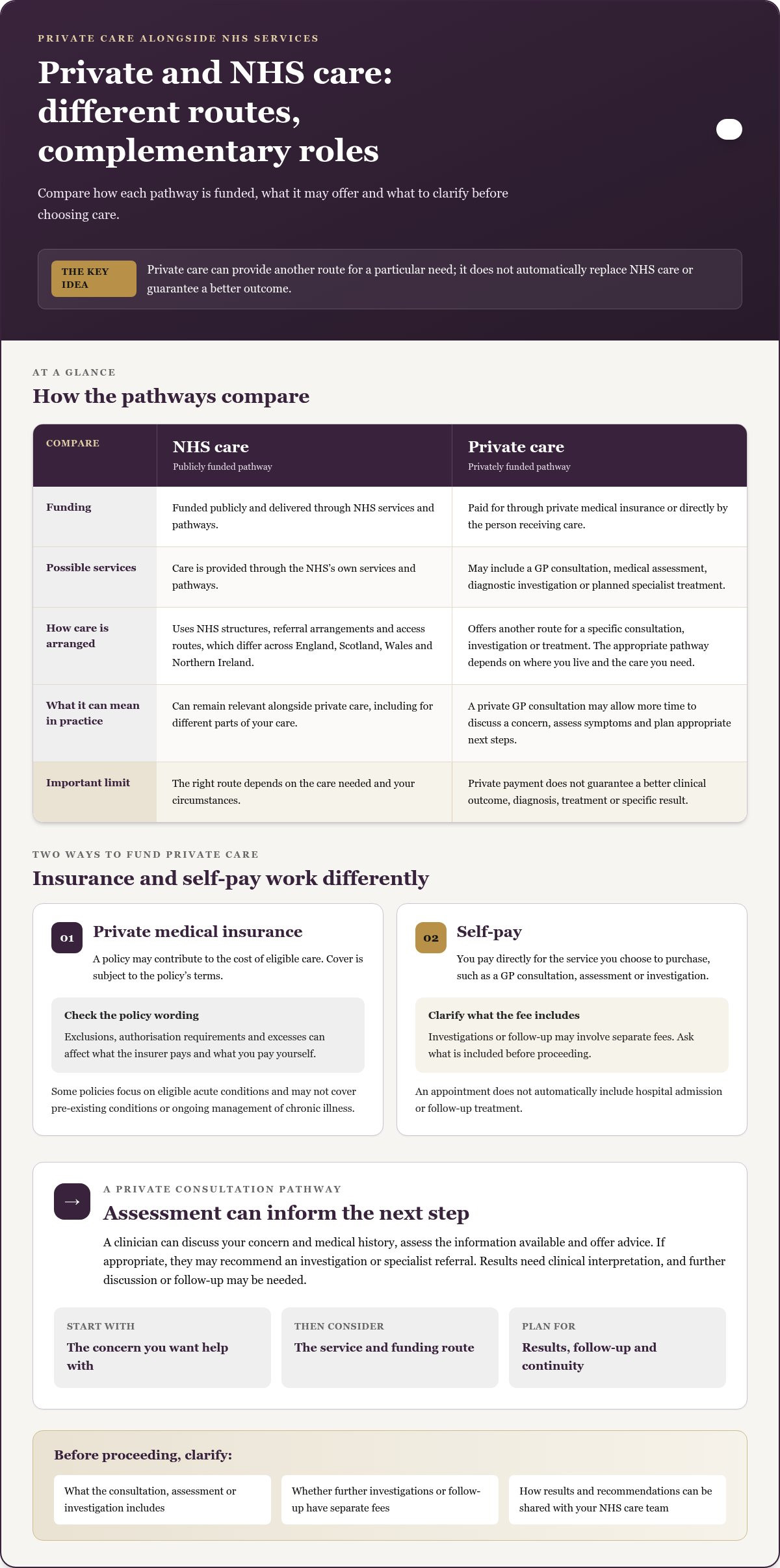
Private healthcare is care funded privately and delivered outside NHS-funded pathways. It may be paid for through a private medical insurance policy or directly by the person receiving care. Services can include a private GP consultation, medical assessment, diagnostic investigation or planned specialist treatment. The overview of private healthcare in the United Kingdom provides wider context on how privately funded care operates alongside the NHS.
The NHS is publicly funded and provides care through its own services and pathways. Private care can offer another route for a particular consultation, investigation or treatment, but it does not replace NHS care in every circumstance. NHS structures, referral arrangements and access routes differ across England, Scotland, Wales and Northern Ireland. The appropriate pathway depends on where you live and the care you need.
Private medical insurance or self-pay: what is the difference?
Private medical insurance is a policy that may contribute to the cost of eligible care. Self-pay means paying directly for a service, such as a GP consultation, medical assessment or investigation. The two routes work differently: insurance is subject to the policy’s terms, while self-pay covers the service you choose to purchase.
Insurance cover varies. Exclusions, authorisation requirements and excesses can affect what the insurer pays and what you pay yourself. Some policies focus on eligible acute conditions and may not cover pre-existing conditions or ongoing management of chronic illness. Before relying on cover, check the policy wording for the specific consultation, test or treatment you’re considering.
What private healthcare does not automatically provide
Paying for private care does not guarantee a better clinical outcome. Its value may be practical, for example having more time to discuss a concern or pursuing an investigation through a private pathway. What is suitable still depends on clinical assessment and your circumstances.
A planned private consultation is not emergency care, and an appointment does not automatically include hospital admission or follow-up treatment. Before proceeding, establish what the service includes, whether investigations or follow-up may involve separate fees, and how results or recommendations can be shared with your NHS care team. Private and NHS care can work alongside one another, with each supporting different parts of your care.
So, is private healthcare worth it uk? Start by defining the concern and identifying the service you’re considering. Then consider how it will be funded, what the pathway includes and where NHS care may remain relevant. This gives you a practical basis for deciding whether private care could meet your needs.
When can private healthcare add value to your care?
Private healthcare is most useful when it addresses a clearly defined need. You might want more time to discuss a persistent concern, seek an assessment or consider an investigation. Paying privately does not automatically mean better care, and it cannot guarantee a diagnosis, a particular treatment or a specific outcome. Its value depends on whether the service offers a practical route to the next step that matters to you.
When might a private GP consultation suit your circumstances?
A private GP consultation may suit you if you want time to explain what has been troubling you, discuss your medical history and understand possible next steps. The appointment gives a clinician an opportunity to assess your concern and offer advice based on the information available, rather than assuming in advance what the answer will be.
If appropriate, the GP may recommend an investigation or make a specialist referral. These steps may lead to further discussion or follow-up: test results need clinical interpretation, and you may need help understanding what they mean for your care. Before arranging an appointment, consider the question you want help with and what you hope to understand by the end of it.
What should you expect from personalised care?
Personalised care starts with understanding your symptoms, relevant medical history and priorities. A clinician can consider these details together and discuss options in light of your circumstances. Longer consultations at GP Plus allow time for detailed discussion, investigation and care planning.
Depending on your circumstances and clinical assessment, a plan may set out proposed investigations, treatment options or follow-up. If a test is arranged, you may need a further conversation about the result. If a referral is recommended, it is one step in the pathway, not a promise of a particular specialist appointment or outcome. Clear explanations of what happens next can help you make informed decisions and understand how private care may sit alongside NHS services.
Suitability depends on your clinical need, the service being considered and your personal circumstances. That is a more useful starting point than asking whether private care is always worth the cost. If you’re considering whether is private healthcare worth it uk applies to you, focus on the concern, the support you need and how you’ll follow through on advice or results.
For a focused discussion of a health concern, private GP consultations can provide time for assessment and personalised planning.
Private healthcare versus NHS care: which option fits your needs?
Neither route is automatically right for every situation. Compare the care you need with what each pathway can provide, including how it is funded, arranged and followed up. Private care may be an option for a planned consultation or investigation, while NHS services remain central to urgent and emergency care.
| Consideration | Private care | NHS care |
|---|---|---|
| Funding | Paid for directly or, where eligible, through private medical insurance. Fees and policy terms affect what is covered. | Provided through publicly funded NHS pathways, subject to the arrangements in each UK nation. |
| Appointment format | Appointment length and scope depend on the service. Some private GP consultations allow more time for discussion. | Appointment format and access depend on the service, clinical need and local pathway. |
| Choice and arrangements | There may be options about providers or appointment arrangements, depending on the service and any insurance policy. | Care is arranged through NHS services and pathways, with the appropriate route guided by clinical need. |
| Limits and follow-up | A consultation does not guarantee onward treatment. Investigations, referrals and follow-up may involve separate arrangements or fees. | Further care is guided by NHS pathways and clinical decisions. |
What might private care offer that matters to you?
For a planned concern, consider whether the appointment’s length and scope match what you need to discuss. A longer consultation may leave more room to explain symptoms and priorities, depending on the service. Private care may also offer choices about appointment arrangements or provider, but these options are not universal. Clinical recommendations remain specific to the individual.
A private GP can assess your concern and discuss suitable next steps. An investigation or referral may be recommended, but a consultation alone does not guarantee a diagnosis, onward treatment or access to a particular specialist.
Where do NHS and private care have different roles?
The NHS remains an important route for urgent and emergency needs. A planned private consultation is not a substitute for emergency services. If you need urgent help, follow current NHS guidance for your nation. Pathways and services can differ across England, Scotland, Wales and Northern Ireland.
Private services may have separate fees and follow-up arrangements. Find out what is included and how results or recommendations will be managed. Private and NHS care can sit alongside one another, but continuity may depend on relevant information being shared between services.
Compare the service with the particular need it is intended to meet. This is a more grounded way to assess whether is private healthcare worth it uk applies to your circumstances than assuming one route is always preferable.
How can you decide whether private healthcare is worth paying for?
Start with the health concern, not the payment route. Work through these steps before committing:
- Define the concern. Note what you’re experiencing and what you hope to gain, such as an assessment, advice or a clearer understanding of possible next steps.
- Identify the service. Decide whether you’re considering a GP consultation, medical assessment or investigation. Each has a different purpose and scope.
- Understand the pathway. Establish what the appointment or investigation includes, how recommendations will be explained and whether further care may be needed.
- Review the implications. Consider affordability, any insurance conditions and how you would manage follow-up or continuing care.
Consider the nature of the need, too. A planned concern may be suitable for a private consultation, while urgent or emergency symptoms call for the appropriate NHS route. If you’re unsure which pathway fits, use current NHS guidance for your nation.
Questions to ask yourself before choosing private care
Be specific about the question you want answered. Are you looking for an initial clinical assessment, time to discuss a concern or advice about possible investigations? Consider whether one appointment may meet that need or whether you may need ongoing care. Your preference for appointment format matters, but weigh it against affordability and the clinical pathway that may follow.
What to understand about fees, insurance and follow-up
Direct fees can depend on the service, appointment duration and clinical complexity. Before proceeding, clarify what the consultation, assessment or investigation includes and whether further steps are charged separately. The guide to private GP consultation costs can help you think through the financial questions to consider.
If you’re using private medical insurance, read the policy wording for relevant exclusions, authorisation requirements and any excess you may need to pay. Don’t assume that a consultation, test or subsequent treatment is automatically covered.
Also establish how results will be communicated, who will discuss their meaning with you and what follow-up is included in the service. An investigation can raise further questions, so understanding how those will be addressed is part of assessing the overall commitment. If you’re asking is private healthcare worth it uk, weigh the service’s scope and likely next steps against the specific need you want to address.
For a considered discussion of a health concern, arrange a private GP consultation with GP Plus.
How GP Plus can support a considered private healthcare decision
Private GP care can be one focused option within a wider healthcare plan. At GP Plus, longer consultations allow time to listen carefully, explore a concern and consider appropriate next steps. This can help if you want a detailed discussion about a non-emergency health matter, rather than assuming private care replaces your usual NHS pathway.
A consultation can sit alongside other services, including medical assessments, health screening, vaccinations, investigations, treatments, prescriptions and specialist referrals. Which steps are suitable depends on the clinical assessment and your individual circumstances. Understanding the purpose of each service can help you decide whether it addresses the need you have identified.
What happens during a private GP consultation?
The conversation can begin with your symptoms, relevant medical history and the concerns you most want to address. Taking time to understand these details helps the GP consider your situation carefully and explain possible next steps clearly.
Depending on the assessment, those steps may include advice, an investigation, treatment or a specialist referral. They are not automatic, and a consultation cannot guarantee a particular diagnosis or outcome. Where further care is appropriate, a personalised plan can set out what has been discussed and what may happen next.
When might a private GP appointment be a useful next step?
If you have a non-emergency concern and would value time to discuss it in detail, a private GP appointment may help you explore the issue and understand potential options. You might want to talk through a symptom, review your health priorities or consider whether an investigation or referral is appropriate. The clinician’s recommendations will depend on the assessment, not simply on a requested test or onward appointment.
Private care has clear limits. GP Plus does not provide NHS-funded services, emergency room care or inpatient hospitalisation. A private consultation is not a substitute for emergency help. For urgent or emergency needs, follow current NHS guidance for your nation. Private and NHS services may form different parts of your care, so understand how recommendations and follow-up fit with your wider health plan.
If you’re still asking, is private healthcare worth it uk, consider whether a focused consultation could help with the particular concern you want to address. If a thoughtful discussion with a GP feels like a suitable next step, you can explore GP Plus private GP consultations.
Make a care decision that fits your needs
Private healthcare may be worth considering when it addresses a specific need, but it is not a universal alternative to NHS care. The right choice depends on the service, your clinical circumstances and what you want help with. Before deciding, understand what a consultation or investigation includes, how it will be funded and what follow-up may involve.
If you’re asking “is private healthcare worth it uk”, focus on the practical value for your situation. A private GP consultation may allow time to discuss a concern in detail and consider appropriate next steps, while NHS care remains essential for emergency needs and may continue to form part of your wider care.
GP Plus provides private GP consultations, assessments, investigations and specialist referrals. Longer appointments support detailed discussion and personalised care planning, giving you space to explore your concerns with a clinician. You do not need to have every answer before starting a conversation.
If a considered discussion about a non-emergency health concern feels like the right next step, explore GP Plus private GP consultations.
Frequently Asked Questions
Is private healthcare worth it in the UK?
It may be worthwhile when a particular service meets a need that matters to you, such as a detailed GP consultation or planned assessment. If you’re asking “is private healthcare worth it uk”, consider what care is offered, your circumstances and the fees or policy terms involved. Private care is not automatically better, cannot guarantee an outcome and should not replace NHS emergency care.
Can I use private healthcare and the NHS at the same time?
Yes, private and NHS care can form part of your wider healthcare journey, depending on the services and pathways involved. Keep relevant clinicians informed about tests, medicines and treatment so they can consider an accurate picture of your health. Before proceeding, understand how results, records, referrals and follow-up will be handled. NHS pathways differ across the UK, so follow current guidance for your nation.
How much does private healthcare cost in the UK?
There is no single cost for private healthcare. Fees vary according to the service, appointment duration and clinical complexity, while insurance premiums and policy terms depend on the individual policy. Before proceeding, establish what a quoted fee covers and whether investigations or follow-up involve separate charges. General price estimates may not reflect your circumstances, so focus on the specific service and its full pathway.
What is the difference between private health insurance and paying privately?
Private health insurance is a policy that may contribute towards eligible treatment under its terms. Paying privately means funding a chosen consultation or service directly. Insurance can include exclusions, excesses and authorisation requirements, so cover is not automatic. Self-pay may suit someone seeking a particular service without taking out a policy. Before deciding, understand the direct fee and how any results or follow-up will be managed.
Does private healthcare guarantee faster treatment or better results?
No. Private healthcare does not guarantee a particular waiting time, diagnosis or clinical outcome. Appointment arrangements depend on the service and your circumstances, while recommendations depend on individual assessment and clinical need. A private consultation may give you time to discuss concerns and possible next steps, but it cannot promise that treatment will be appropriate or that you will not also need an NHS pathway.
What happens if I need emergency care after seeing a private GP?
A private GP consultation is not an emergency department service. If you have a medical emergency, use the appropriate NHS emergency route rather than waiting for a routine appointment. A private GP can assess a concern within the consultation’s scope and discuss next steps, but urgent symptoms may require immediate emergency assessment. Follow current NHS advice for your location within the UK.
Is private GP care worth it if I already have private health insurance?
It depends on your policy and what you need from the appointment. Check whether GP consultations, investigations or follow-up are covered, whether prior authorisation is required, and whether exclusions or an excess apply. You may choose to pay directly for a particular GP service or use an eligible insurance pathway. Read your policy documents before deciding, and understand how results and recommended next steps will be managed.


