

What if the headline fee for a shingles vaccination doesn’t tell you the full cost of completing the course? It’s understandable to want a clear figure, but the shingles vaccination private cost can depend on what’s included, from a suitability consultation to the second dose.
This guide explains what can shape the total cost and how private vaccination compares with the NHS programme, where eligibility depends on age, health circumstances and, in some cases, the UK nation where you live. You’ll also learn what to consider about the vaccine, its two-dose schedule and possible side effects before deciding what’s right for you.
At GP Plus, longer private GP consultations allow time to discuss your health needs and vaccination options. The sections ahead explain the vaccination pathway, the questions to consider and the health information that may be useful for an appointment, helping you make an informed decision without feeling rushed.
Key Takeaways
- Assess the full shingles vaccination private cost by separating the vaccine course from any clinical assessment or follow-up charges.
- Find out how the two-dose course affects the total fee and what the stated price covers.
- Check current NHS eligibility for your age and UK nation before comparing private vaccination timing and costs.
- Use your medical history, including relevant conditions and medicines, to guide a discussion about vaccine suitability.
- GP Plus offers vaccinations and longer private GP consultations, allowing time to discuss your health circumstances and care options.
Shingles vaccination private cost: what determines the total fee?
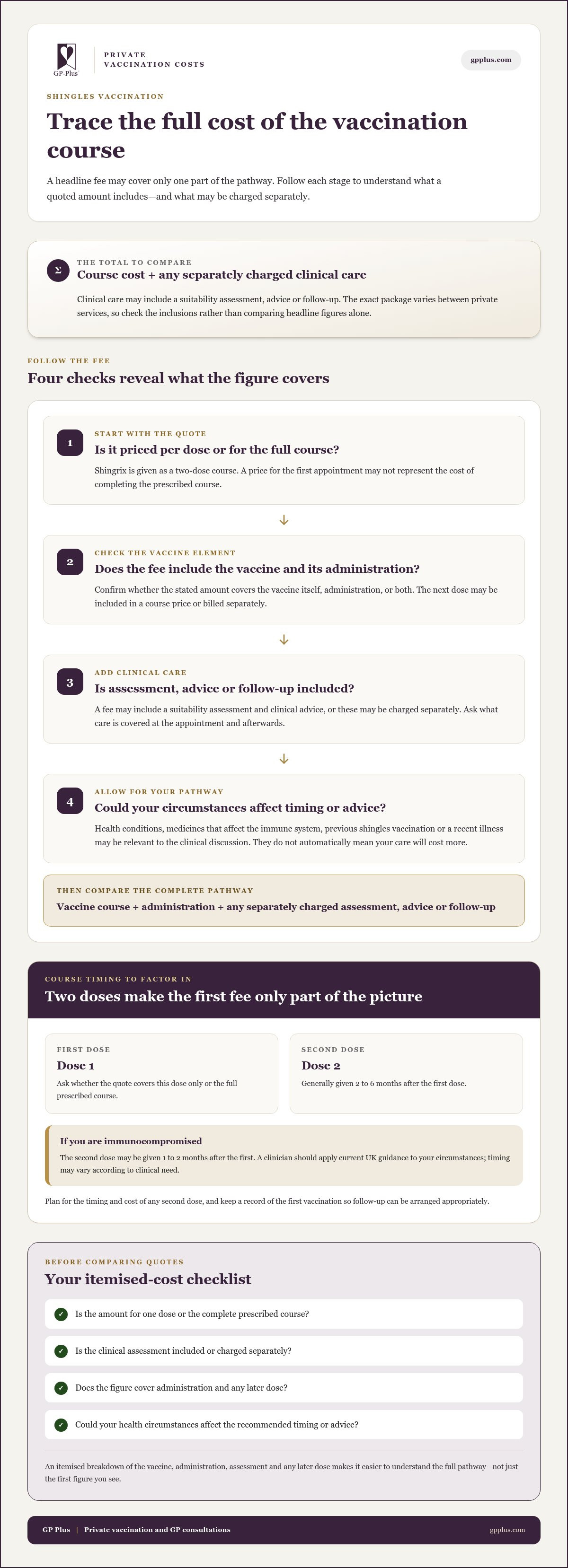
A quoted vaccine fee may cover the injection alone, or it may include a clinical assessment and advice. A later dose may be charged separately. That distinction matters: comparing a price per dose with a price for a complete course can make two options look more similar than they are.
The total private vaccination cost is the combined cost of the prescribed vaccine course and any associated clinical care, including assessment, advice or follow-up that is charged separately. To understand what you may need to budget for, look beyond the headline figure and check what it covers.
What may a private shingles vaccination fee include?
A fee may cover vaccine administration, a suitability assessment, clinical advice or some combination of these. The next dose might be included in a course price or billed separately. There isn’t one standard package across private services, so compare whether the stated figure is per dose or for the full course, and which elements of care are included.
For a clear comparison, look for an itemised breakdown of the vaccine, administration, assessment and any later dose. GP Plus provides vaccinations and private GP consultations, with longer appointments allowing time for a considered discussion of individual needs. When discussing vaccination with GP Plus, include the fee and its stated inclusions in your planning so you can understand the cost of the full pathway.
Why can the total cost differ between people?
The prescribed course is one factor. Shingrix is given as two doses, and the timing of the second dose can depend on clinical guidance and a person’s circumstances. The Zoster vaccine overview describes shingles vaccines and their use; a clinician can discuss which advice applies to your situation.
Your health history may also shape the assessment and advice you receive. Existing conditions, medicines that affect the immune system, previous shingles vaccination or a recent illness may be relevant to a suitability discussion. These details don’t automatically mean that your care will cost more, but they can affect the clinical pathway and what needs to be considered before vaccination.
Before comparing figures, use this checklist:
- Is the amount for one dose or the complete prescribed course?
- Is the clinical assessment included, or charged separately?
- Does the figure cover administration and any later dose?
- Could your health circumstances affect the recommended timing or advice?
This approach keeps the focus on the complete pathway, not just the first figure you see. It also gives you a useful basis for discussing vaccination as part of preventive care, including the costs and clinical considerations that matter to you.
Shingles vaccination and the vaccine course: what are you paying for?
Shingles develops when the varicella-zoster virus, which causes chickenpox, becomes active again in the body. It can cause a painful rash and, for some people, lasting nerve pain. The vaccine is intended to lower the risk of developing shingles; it cannot guarantee that you will not get it.
The shingles vaccine is a preventive vaccine designed to reduce the likelihood of shingles, with the course and timing guided by current clinical recommendations and personal circumstances. Understanding the recommended course helps explain why a single-dose figure may not represent the full vaccination pathway.
In the UK, Shingrix is the vaccine used for shingles prevention. It is a non-live vaccine. More information about the vaccine and who may be offered it through the NHS is available in the NHS shingles vaccination guidance. Private vaccination and NHS eligibility are separate pathways, so the advice relevant to you depends on your circumstances.
Does private shingles vaccination involve more than one dose?
For Shingrix, the course consists of two doses. The second is generally given 2 to 6 months after the first; for people who are immunocompromised, it may be given 1 to 2 months later. Your clinician should apply current UK guidance to your situation, as recommendations can be updated and timing may vary according to clinical need.
Before booking, establish whether the amount you are considering covers the complete prescribed course or only the first appointment. If a second dose is needed, plan for its timing as well as its cost, and keep a record of the first vaccination so the follow-up can be arranged appropriately.
What should you know about vaccine suitability?
Age, medical history and immune status can all be relevant to the clinical assessment. Previous shingles vaccination may also affect the advice given. A general article can’t determine whether vaccination is suitable for you, but sharing these details with a clinician helps support an informed decision.
Before an appointment, make a note of:
- ongoing health conditions, particularly those affecting immunity;
- medicines you take, including any that affect your immune system;
- any previous shingles vaccination, including when it was given, if known;
- questions about dose timing, expected protection or possible side effects.
You don’t need to decide everything in advance. A careful discussion can clarify how the recommended course applies to your health and what follow-up it involves. GP Plus provides vaccinations and private GP consultations, with longer appointments that allow time to explore individual needs. Learn more about private GP consultations as part of discussing vaccination and preventive care.
Private shingles vaccination or the NHS: how to compare your options
The NHS and private routes differ in eligibility, timing, appointment pathway and how costs are handled. NHS vaccination is offered according to each nation’s programme criteria. Private vaccination is a separate fee-for-service option, so weigh the shingles vaccination private cost against your eligibility and your reasons for considering vaccination now.
Compare the complete pathway rather than focusing on one detail. Consider whether you qualify for the NHS programme, when vaccination may be offered, how the appointment is arranged, what the private fee includes and whether your recommended course requires follow-up. Clinical suitability matters whichever route you consider.
Who may be eligible for shingles vaccination through the NHS?
Eligibility can change and may differ across the UK. In England, current programme guidance includes eligible age groups and people who are severely immunocompromised. Scotland has its own phased arrangements. Wales and Northern Ireland also publish programme guidance, so don’t assume that an age criterion in one nation applies elsewhere or to you personally.
For England, start with the NHS shingles vaccination guidance. In Scotland, consult NHS inform’s shingles vaccine guidance; for Wales and Northern Ireland, use the current information from Public Health Wales and nidirect respectively. Check the latest guidance for your nation, including eligibility details related to age, immune status or previous vaccination. Your eligibility should be determined using the current programme rules, not a general summary.
When might someone consider a private route?
Private vaccination may suit someone considering a separate, paid pathway rather than waiting for or relying on NHS programme eligibility. It doesn’t guarantee a particular appointment date or clinical outcome. A clinician still needs to consider whether vaccination is suitable and advise on the course that applies to you.
Use your priorities to compare the routes. For example, if you aren’t currently eligible through the NHS, you might weigh the private fee and course arrangements against the value you place on pursuing vaccination sooner. If you may qualify for NHS vaccination, review the current programme and timing before deciding whether private care fits your needs.
- Eligibility: check the current rules for your UK nation and personal circumstances.
- Timing: compare the NHS programme pathway with the private option without assuming a particular wait.
- Cost: consider the full private course and any associated clinical care.
- Clinical advice: factor in your health history, suitability and recommended follow-up.
This comparison can help you make a considered choice without treating private care as a substitute for NHS eligibility or assuming the same pathway applies to everyone.
How to decide whether private shingles vaccination is right for you
A practical sequence can help you decide whether a private appointment suits your circumstances. First, check your eligibility under the current NHS programme for your UK nation. Then review the full shingles vaccination private cost, including what the fee covers and any later dose. Finally, discuss suitability with a clinician who can consider your health history rather than relying on a general recommendation.
Vaccination decisions should reflect current guidance and your individual clinical circumstances. Use these steps to prepare, not to diagnose yourself or decide that vaccination is appropriate without clinical advice.
- Check eligibility: consult current NHS guidance for where you live.
- Review the private fee: establish what is included across the recommended course.
- Discuss suitability: share relevant health information and ask about the advice that applies to you.
What health information should you bring to an assessment?
A useful assessment starts with a clear picture of your health. Beforehand, note any relevant diagnoses, medicines and allergies, alongside details of previous shingles vaccination if you’ve had one. Mention current illness or concerns about your immune system, too. You don’t need to know whether a detail changes the recommendation; sharing it allows the assessing clinician to decide what matters.
If you’re unsure of a medicine’s name or when you received a previous vaccine, bring the information you have rather than guessing. Include questions about your health conditions or treatment, and tell the clinician if anything has changed since you arranged the appointment. Individual advice should come from the professional assessing you.
What questions help clarify the full private cost?
A quoted fee is easier to assess when you know what it covers. Check whether it includes the assessment, vaccine administration and full course, or whether a later dose is charged separately. You can also clarify the expected appointment steps and recommended schedule, so you understand the practical commitment as well as the fee.
- Is the quoted amount for one dose or the complete course?
- Are assessment, advice and administration included?
- How will the timing of any later dose be explained and arranged?
- What should you do if your health or circumstances change before follow-up?
These questions help you compare the actual care pathway with your priorities, without assuming every service includes the same items. At GP Plus, longer private GP consultations provide time for a personalised discussion of vaccination needs and relevant health circumstances. Explore GP Plus vaccination care as you consider your next step.
Getting private shingles vaccination through GP Plus
Choosing a private vaccination appointment should leave you with a clear understanding of the clinical advice and the steps involved. GP Plus provides vaccinations and private GP consultations, with longer appointments that allow time to discuss your health history and individual needs. This gives you space to consider suitability carefully, rather than treating vaccination as a one-size-fits-all decision.
The shingles vaccination private cost and what it includes are important parts of that decision. Before proceeding, review the fee information alongside the recommended course, any follow-up arrangements and the clinical discussion. Understanding the whole pathway can help you make an informed and manageable decision.
What can you expect from a private vaccination appointment?
The appointment begins with a discussion of relevant health circumstances. The clinician may ask about existing conditions, medicines, allergies, immune-system concerns and previous shingles vaccination, then consider these details when discussing suitability. You can raise questions about expected benefits, possible side effects or anything you’re uncertain about.
If vaccination is appropriate, the clinician can explain the recommended course, timing and practical next steps. The advice should reflect current guidance and your circumstances. Bring a list of medicines or health questions if that helps you feel prepared, and mention any changes in your health since arranging the appointment. An article can’t decide suitability for you, but an individual clinical conversation can address details that general guidance cannot.
How to take the next step with confidence
Before making a decision, review four points: the current fee, exactly what it includes, the full course and any follow-up, and the clinical advice relevant to your health. If a detail is unclear, raise it during the appointment discussion so you understand the pathway before proceeding. You don’t need to arrive with every answer. Questions about your personal circumstances are a natural part of a considered clinical conversation.
- Keep a note of relevant diagnoses, medicines and allergies.
- Bring any information you have about previous shingles vaccination.
- Write down questions about suitability, dose timing and follow-up.
- Review the fee and its stated inclusions as part of the complete course.
At GP Plus, longer consultations support a personalised discussion of vaccination needs and relevant health history. Taking time to understand your options can make the decision clearer, whether you’re asking about suitability, the course or what happens next. Explore vaccination appointments with GP Plus.
Take your next step with confidence
You don’t need to make a decision based on a headline fee or a general recommendation alone. If you’re still weighing up the shingles vaccination private cost, consider what matters most to you and note any questions that would help you feel comfortable with the way forward.
A conversation about your circumstances can help turn uncertainty into a clearer choice. You can discuss what you hope to understand, raise concerns and decide on the next step with appropriate clinical guidance. It’s reasonable to seek clarity before committing to a course of care.
Explore vaccination care with GP Plus and take a considered next step. With relevant information and a conversation centred on your needs, you can approach your decision with greater confidence.
Frequently Asked Questions
How much does private shingles vaccination cost?
There isn’t one fixed shingles vaccination private cost: the total depends on the current fee, what your appointment includes and whether your recommended course requires a later dose. A headline figure may cover only part of the pathway. Compare the cost of completing the course and check whether clinical assessment, advice and administration are included. For GP Plus, discuss the current fee and its stated inclusions as part of planning your care.
Is shingles vaccination free on the NHS?
NHS shingles vaccination is available to people who meet the current programme criteria, but eligibility isn’t universal. Criteria can change and may vary between England, Scotland, Wales and Northern Ireland, so check the latest official NHS guidance for the nation where you live. NHS programme eligibility is separate from a private, fee-for-service appointment. If your circumstances are unusual, such as immunosuppression, use current guidance and seek individual clinical advice.
How many doses of shingles vaccine do you need privately?
The recommended course depends on the vaccine and current clinical guidance. For Shingrix, the UK course is two doses; the second is usually given 2 to 6 months after the first, with a shorter interval advised for some people who are immunocompromised. Your clinician should confirm the schedule that applies to you. Establish the full course and timing before comparing fees, and don’t assume one dose completes your recommended vaccination.
Can you have the shingles vaccine if you have already had shingles?
Having had shingles doesn’t by itself determine whether or when vaccination is appropriate. The advice can depend on when the episode occurred, your health and current clinical guidance, so there’s no single waiting period to apply to everyone. Tell the clinician roughly when you had shingles and whether you’ve had it more than once. They can consider your history and discuss the timing and suitability of vaccination without relying on a general rule.
What are the common side effects of the shingles vaccine?
Common reactions to Shingrix can include a sore, red or swollen injection site, tiredness, muscle aches, headache, shivering, fever or nausea. These are generally short-lived, but check the current patient information leaflet for up-to-date advice. Seek urgent medical help for signs of a severe allergic reaction, such as difficulty breathing or swelling of the face or throat. Tell your clinician about allergies, previous vaccine reactions or other concerns beforehand.
Does the shingles vaccine guarantee that you will not get shingles?
No. Vaccination reduces the risk of shingles, but it can’t promise complete protection. If you develop a new rash or pain that concerns you after vaccination, seek medical advice rather than assuming you’re protected from illness. A clinician can assess your symptoms and advise on next steps. It’s understandable to want certainty, but vaccination is a preventive measure, not a substitute for assessment if you think you may have shingles.
Can you have the shingles vaccine while taking other medicines?
Possibly, but your medicines and underlying conditions should be considered as part of a suitability assessment, particularly if they may affect your immune system. Don’t stop or change prescribed treatment to prepare for vaccination unless the clinician responsible for your care advises you to. Bring a complete medicines list, including doses if known, and mention any recent treatment changes. The clinician can use this information to apply current guidance to your circumstances.


