

Do you need a GP referral to see a private dermatologist, or can you arrange an appointment yourself? A search for “private dermatologist referral UK” brings up both options because a referral can help direct you to specialist care, but it isn’t a universal requirement. Some private clinics accept self-referrals, whilst insurers may require a GP referral and pre-authorisation before covering consultation costs.
It’s understandable to be unsure which route applies, particularly when you’re managing a skin concern and trying to avoid unexpected hurdles. The right next step depends on how you plan to pay, the clinic’s requirements and whether a GP assessment would help clarify your symptoms and history. Check these details before booking.
This guide explains how private and NHS referral routes differ, what to check with a clinic or insurer, and how to assess a dermatologist’s credentials, including the GMC Specialist Register. If you’d like to discuss your symptoms before deciding, a private GP consultation can provide time to explore your concerns and possible next steps. Any referral depends on clinical assessment and the relevant specialist pathway.
Key Takeaways
- A private dermatologist referral in the UK can help direct your concern to specialist assessment, but the route depends on the clinic and how you plan to pay.
- Before booking, check whether the provider accepts direct enquiries or requires referral information, and remember that the NHS pathway is separate.
- If using insurance, confirm the policy’s referral and authorisation process before arranging an appointment.
- Check the dermatologist’s registration and relevant specialist credentials, then clarify what the consultation includes.
- Prepare a clear account of your symptoms and relevant history so you can discuss suitable next steps with a GP.
Private dermatologist referral in the UK: when might you need one?
Referral rules vary between clinics, consultants and insurers, so it’s sensible to check what applies before arranging care. A private dermatologist referral is a GP or another clinician directing you to a specialist for assessment of a skin concern. It can provide useful background, but it isn’t a diagnosis, treatment recommendation or decision that further investigations are needed.
Dermatology covers the assessment and care of conditions affecting the skin, hair and nails. If you’re unfamiliar with the specialty, the Dermatology overview offers useful background. Whether you need a referral depends on the provider’s access policy and, if you’re claiming through insurance, your insurer’s terms. A referral isn’t a universal requirement, so confirm the arrangements directly before booking.
When is specialist dermatology input worth discussing?
Consider seeking clinical advice about a concern that persists, changes or has no clear explanation. For example, you might discuss a rash that isn’t settling or a mole whose appearance has changed. These examples don’t establish a diagnosis. A qualified healthcare professional can assess your symptoms and decide whether specialist input is appropriate.
The level of urgency depends on the clinical features, which a clinician should assess. If you’re concerned about a change or unsure how promptly to seek advice, explain what you’ve noticed and when it began rather than trying to judge its significance yourself.
Does every private dermatologist require a GP referral?
No. Some private providers accept self-referrals or direct enquiries, whilst others ask for a referral from a GP or another clinician. Policies vary, so ask the clinic what it requires before arranging an appointment. Check whether it needs a referral letter, medical history or other information, and whether these must be received before you book.
Insurance requirements are a separate consideration. Your chosen dermatologist may accept self-referrals, but your insurer may still require a clinician’s referral or approval before covering care. Confirm the process with both the clinic and insurer, including what needs authorisation and at what stage. If you’d like clinical advice first, a private GP consultation can provide time to discuss your symptoms and history. Any referral facilitation depends on clinical assessment and the relevant specialist pathway.
How private dermatologist referrals work across UK care pathways
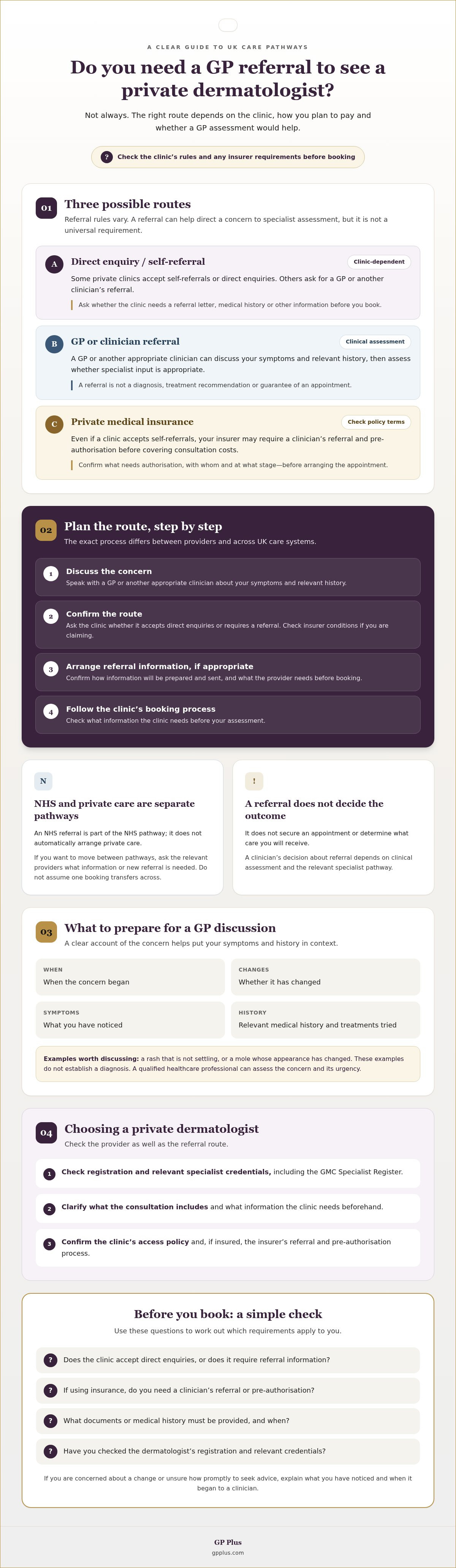
A referral is usually one step in a wider process. It doesn’t secure an appointment or determine what care you’ll receive. Requirements can differ between providers and across the UK’s care systems, so check the current process with the clinic and, if relevant, your insurer.
- Discuss the concern: Speak with a GP or another appropriate clinician about your symptoms and relevant history.
- Confirm the route: Ask whether the clinic accepts direct enquiries or requires a referral, and check any insurer conditions.
- Obtain the referral information: If a clinician considers a referral appropriate, confirm how the information will be prepared and sent.
- Arrange assessment: Follow the clinic’s booking process and check what information it needs before your appointment.
This sequence can help you plan, but the exact steps aren’t the same everywhere. A private dermatologist referral in the UK may involve different forms or arrangements depending on the provider and the relevant UK nation. An NHS referral is part of the NHS pathway; it doesn’t automatically arrange private care. If you want to move between pathways, ask the relevant providers what information or new referral is needed rather than assuming one booking transfers across.
What happens during a GP appointment about a skin concern?
A GP may ask when the concern began, whether it has changed, what symptoms you’ve noticed and what treatments you’ve tried. Your relevant medical history can also help put the concern in context. Depending on the situation, the clinician may assess the affected area and consider whether specialist input is appropriate. The decision is clinical, so requesting a particular specialist doesn’t guarantee a referral. The British Association of Dermatologists explains how to ask for a referral and why a GP may decide whether one is needed.
What information can a referral include?
Where appropriate, referral information may describe the concern, relevant medical history and examination findings. This context can help the receiving clinician understand why specialist assessment is being considered, although it doesn’t determine a diagnosis or what happens next. The format and method of transfer vary, so ask the referring clinician and clinic what information is required and whether you need to provide anything yourself.
If you’d value time to discuss your symptoms and possible next steps, a private GP consultation may be an option. GP Plus facilitates specialist referrals, with any referral depending on clinical assessment and the relevant pathway.
GP referral, self-referral or insurer route: compare your options
The most suitable route depends on whether you want a clinician’s assessment first, whether a clinic accepts direct enquiries and how you intend to pay. If you’re searching “private dermatologist referral uk”, compare these practical routes before deciding. NHS eligibility, private consultation fees and insurance cover are separate questions, so confirm each with the relevant provider.
| Route | Likely starting point | What to confirm |
|---|---|---|
| GP referral | A GP consultation to discuss your skin concern and whether specialist input may be appropriate. | Whether the clinician recommends referral, what information the specialist needs and how it will be sent. |
| Direct clinic enquiry | Contacting a private dermatology clinic to ask about self-referral and booking. | Whether a GP letter is needed, what history or records to provide, and what the consultation covers. |
| Insurer-approved referral | Checking your policy and contacting your insurer before arranging insured care. | Whether a GP referral or pre-authorisation is required, whether the provider is recognised, and what your policy covers. |
Insurance rules can differ from a clinic’s booking policy. A clinic may accept a direct enquiry, for example, while your insurer requires a GP referral or authorisation before covering the consultation. Confirm the process with your insurer before booking. Ask whether tests or follow-up may fall outside your cover, and don’t assume an NHS referral automatically pays for or arranges private care.
When might a GP referral be a useful first step?
A GP can discuss your symptoms and relevant history, assess the concern and consider whether specialist input is appropriate. This can help if you’re unsure which route to take or what information a dermatologist may need. GP Plus offers private GP consultations and facilitates specialist referrals, subject to clinical assessment and the relevant pathway. Read the GP Plus guide to private medical care to learn more about its approach.
What should you check with a clinic or insurer?
Before committing, ask the clinic whether it accepts self-referrals or requires a GP letter, and what records it needs. Ask your insurer about provider recognition, pre-authorisation and any policy-specific referral conditions. Then clarify what the consultation includes, whether tests are charged separately and how follow-up is arranged. These checks help you understand the requirements before choosing a private dermatologist referral route.
How to choose a private dermatologist and prepare for referral
Choosing a dermatologist involves more than finding an available appointment. Check that the clinician’s qualifications and experience are relevant to your concern, then establish what the consultation involves and what may happen afterwards. Preparing beforehand can also help you explain what you’ve noticed clearly, whether you’re arranging a referral or attending directly.
How can you check a dermatologist’s credentials?
Use the General Medical Council register to check a doctor’s registration and whether they’re listed on the Specialist Register for dermatology. Consider whether their stated experience fits the issue you want assessed. Review the clinic’s information about the clinician and their practice rather than relying on advertising alone. If anything is unclear, ask the clinic to explain the specialist’s qualifications and role before booking.
What should you take to a dermatology appointment?
A concise record can make it easier to explain your concern without needing to remember every detail during the appointment. Before you go, note:
- When the concern began and how it has changed, including any dates you recall.
- Symptoms, possible triggers and treatments you’ve already tried.
- Your current medicines and any relevant medical history.
- Details of previous assessments, tests or referral information, if available.
Ask the clinic in advance whether it wants photographs or records, and how these should be shared securely. Follow its privacy instructions rather than sending sensitive information through an unapproved channel.
Also clarify whether the appointment is in person or remote, what the consultation covers and how follow-up is arranged. Ask what the likely next steps could involve, including whether further tests may be considered, and confirm fees directly with the clinic. If you’re using private medical insurance, check your policy and authorisation requirements with your insurer. Cover depends on the terms of your plan.
If you’d like to talk through your symptoms and possible referral options with a GP, arrange a private GP consultation. A referral depends on clinical assessment and the relevant specialist pathway.
Arrange the next step with a private GP referral discussion
Once you’ve identified a possible route, confirm the practical details before booking. Check whether the dermatologist or clinic needs a referral, whether your insurer has specific conditions, and whether a GP assessment would help you decide what to do next. These checks can reduce confusion, but they can’t guarantee a referral, a particular appointment or insurance cover.
A private GP consultation gives you an opportunity to discuss your skin concern, relevant history and possible next steps with a clinician. GP Plus is a private GP clinic that facilitates specialist referrals where appropriate. Whether a referral is suitable depends on clinical assessment and the relevant pathway, so confirm the clinic’s current referral arrangements before booking.
What to ask before arranging a GP consultation
Before making an appointment, contact the clinic to check whether it can discuss your concern and whether specialist referral facilitation may be appropriate. Confirm appointment availability, how the consultation is arranged and the applicable fees directly with the clinic. Ask what information to bring, such as a medicines list or details of previous assessments, and whether any records should be shared beforehand. If you plan to use insurance, check the insurer’s referral and authorisation requirements separately.
Having a brief timeline of your symptoms and any changes can help you explain the concern clearly. Note what you’ve already tried and the questions you’d like answered. This can support a focused discussion, although the appropriate next step will depend on the clinician’s assessment.
When should you seek urgent medical advice instead?
This guide can help you understand referral routes, but it isn’t a substitute for urgent assessment or emergency care. If your symptoms are severe or worsening rapidly, seek advice through the appropriate urgent medical service where you are in the UK. For a life-threatening emergency, call 999. Don’t wait for a routine private appointment if you believe urgent help is needed.
For a non-emergency concern, you can confirm the clinic’s requirements, review your insurance terms and decide whether you’d like to speak with a GP. If you’re considering a private dermatologist referral in the UK, contact the clinic directly to check its current consultation arrangements, availability, fees and referral process before booking. This gives you a clearer basis for choosing a route that fits your clinical needs and circumstances.
Choose a referral route that feels right for you
A private dermatologist referral in the UK isn’t a single fixed process. Some clinics accept direct enquiries, whilst others or your insurer may require a clinician’s referral. Confirm the provider’s requirements and your policy terms before booking, and check the dermatologist’s credentials and what the consultation includes. Preparing a clear account of your symptoms, medicines and relevant history can also help you make the most of an assessment.
If you’d like to discuss your concerns and possible specialist options with a GP, GP Plus offers longer private GP appointments for a thorough conversation. The clinic facilitates specialist referrals where appropriate, subject to clinical assessment and current arrangements. A referral can’t be guaranteed, but a considered discussion can help clarify suitable next steps.
Discuss your concerns and referral options with GP Plus, and confirm the clinic’s current arrangements before booking. Taking time to ask questions is a constructive step towards feeling clearer about your care.
Frequently Asked Questions
Do I need a GP referral to see a private dermatologist in the UK?
Not always. Some private dermatology clinics accept direct bookings, whilst others require a referral from a GP or another clinician. The clinic’s booking policy and your insurer’s rules may differ, so check both before arranging an appointment. If a referral is required, a GP can assess your concern and consider whether specialist input is appropriate. A referral supports assessment, but it doesn’t guarantee a particular diagnosis, treatment or investigation.
Can I refer myself to a private dermatologist in the UK?
Yes, some private clinics accept self-referrals, but this isn’t available everywhere. Contact the provider to ask whether you can book directly and what information it needs, such as a symptom history or previous test results. If you’re using private medical insurance, check with your insurer too. It may require a GP referral or authorisation even if the clinic accepts self-referrals.
How do I get a private dermatologist referral through my GP?
Arrange a GP consultation and explain what you’ve noticed, how long it has been present, any changes and relevant medical history. Bring details of medicines or treatments you’ve tried. The GP can assess the concern and discuss whether specialist input is appropriate. Referral decisions depend on clinical assessment, so asking for a referral doesn’t guarantee one. If you see a private GP, ask whether referral facilitation is available and confirm the current process.
Will private medical insurance cover a dermatologist appointment without a referral?
It depends on your policy. Insurers may require a GP referral, pre-authorisation or both before covering a private dermatology appointment. A clinic accepting direct bookings doesn’t mean your insurer will pay for the consultation. Contact your insurer before booking to confirm the steps, whether the dermatologist is recognised under your policy and what the cover includes. Check any exclusions or limits, including whether follow-up appointments or investigations need separate approval.
Can I use an NHS referral to see a private dermatologist?
An NHS referral doesn’t automatically arrange or fund a private dermatology appointment. NHS and private care are separate pathways, so contact the private clinic to ask what it requires and whether it can use existing referral information. If you’re considering private care, also check how you’ll pay and whether your insurer needs a new referral or authorisation. Ask your NHS GP or the relevant provider if you’re unsure how to proceed.
What should a GP include in a private dermatology referral?
There isn’t one referral format used by every provider. Where relevant, a GP may describe the skin concern, when it began, how it has changed, relevant medical history and examination findings. This background can help the receiving clinician understand why specialist assessment is being considered. Ask the clinic what information it needs and whether it requires a particular process. A referral provides context, but it doesn’t confirm a diagnosis or dictate treatment.
How do I check whether a dermatologist is registered in the UK?
Search for the doctor on the General Medical Council’s online medical register to check their registration and listed details. You can also check whether they appear on the Specialist Register for dermatology, which is relevant when choosing a specialist. Review the clinic’s information about the doctor’s experience and ask about qualifications relevant to your concern. Professional membership, such as membership of the British Association of Dermatologists, can be another detail to verify.


