

What if the most comprehensive-looking assessment isn’t the most useful one for you? Executive health screening packages can bring a range of checks together, but the number of tests alone doesn’t show whether an assessment fits your health priorities or what will happen if a result needs attention.
It’s understandable to want a clear picture of your health, particularly when package options can be difficult to compare. Screening may highlight possible risks or prompt further investigation, but it can’t guarantee that you’re free from illness. Findings also need to be interpreted in context.
This guide explains how to compare assessment options, understand what screening results can and can’t establish, and ask about follow-up. It covers how personal health history and priorities can shape test choices, why individual and corporate assessments may serve different needs, and what to clarify about results discussions and next steps. GP Plus offers health screening tailored to individual and corporate requirements, with longer appointments to discuss individual needs and support personalised care planning.
Key Takeaways
- Start with your health history and priorities to identify what an assessment should explore, rather than assuming every test is relevant.
- Compare executive health screening packages by checking confirmed inclusions and how the assessment can be tailored to your needs.
- Before booking, find out who will explain your results and what options are available if further investigation or a referral is appropriate.
- Prepare by gathering relevant health information, noting your questions and priorities, and confirming any appointment instructions.
- For corporate assessments, clarify how the screening approach will meet the organisation’s requirements while accounting for individual needs.
What are executive health screening packages, and who may benefit?
Executive health screening packages are structured assessments that review selected aspects of a person’s health. Their scope is most useful when shaped around individual needs. Depending on the assessment, this may involve discussing health history, a clinical examination or investigations. A physical examination is one possible part of the process, but no fixed set of checks is right for everyone.
Screening looks for selected indicators that may suggest a health risk or warrant further assessment. It isn’t a diagnosis, and a reassuring result can’t guarantee that a person has no health condition. Results need to be understood in context, including relevant history, risk factors and concerns raised during the appointment.
Busy professionals may value a planned opportunity to review their health, while employers may consider screening as an employee benefit. The purpose and appropriate scope can differ. An individual may have personal priorities to discuss, while a corporate assessment may need to reflect organisational requirements and recognise that employees have different health needs.
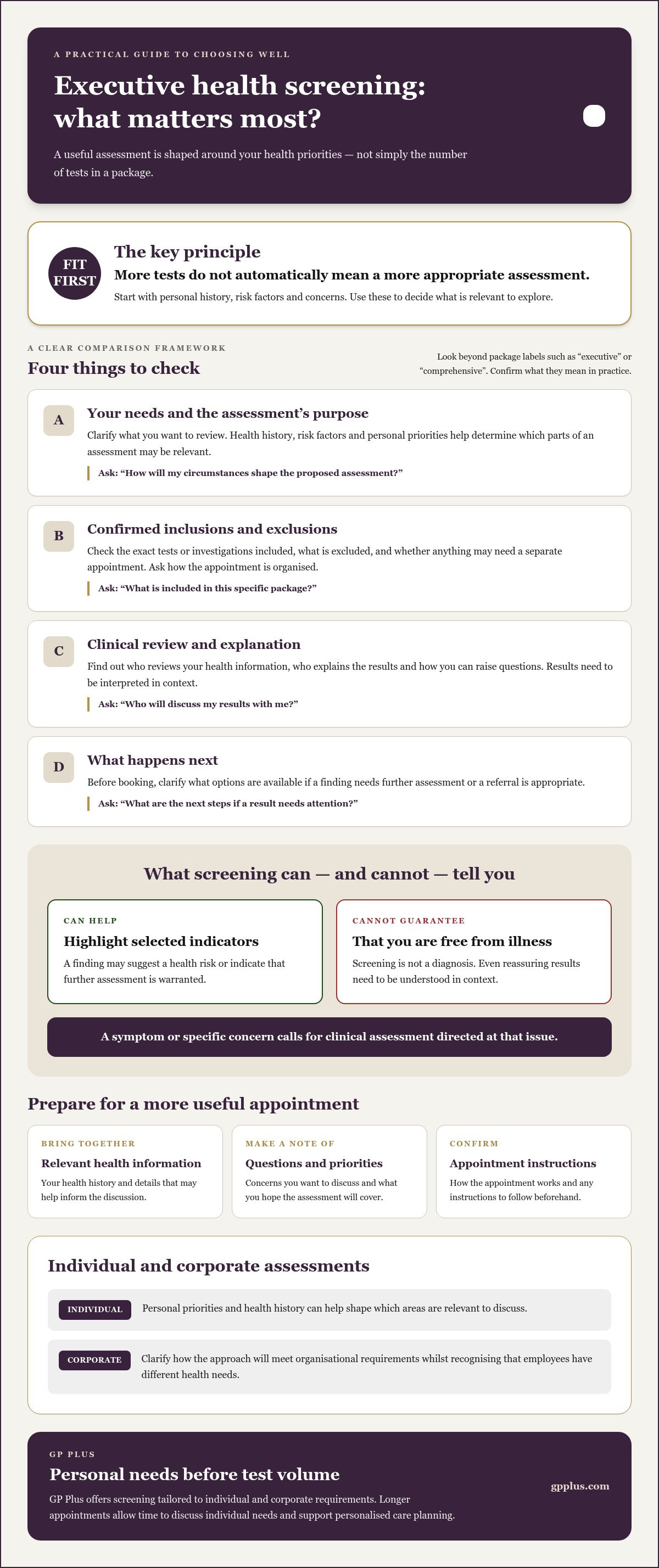
Screening looks for selected health indicators in people who may feel well. A symptom or specific concern calls for clinical assessment directed at that issue.
How is executive screening different from a routine health check?
A planned screening assessment reviews selected areas of health, often before a particular concern has prompted an appointment. A routine consultation may instead begin with a current symptom, a change in wellbeing or a question about an existing condition. In either case, discussion with a clinician helps determine what is relevant. The scope should reflect health history, risk factors and personal priorities, rather than assume every executive assessment is universally comprehensive.
Is an executive health screening package suitable for everyone?
Not necessarily. Suitability depends on personal circumstances, so discuss the proposed assessment with a clinician before deciding. Symptoms or a known condition may call for targeted clinical care rather than a general screening package. Screening shouldn’t delay attention to a concern that needs investigation. If you’re considering broader preventive checks, read this proactive health screening guide for further context.
GP Plus offers health screening tailored to individual and corporate requirements. Longer appointments allow time to discuss individual needs and support personalised care planning, keeping the focus on what matters to the person rather than test volume alone.
What should an executive health screening package include?
There isn’t one test list that’s right for every person or assessment. A useful scope starts with the reason for screening and the person’s health history, then considers which parts of an assessment may be relevant. Depending on individual needs, these could include a review of clinical history, an examination or investigations. More tests don’t automatically make a package more appropriate.
Before comparing executive health screening packages, ask the provider to confirm the exact inclusions and exclusions, how the appointment is organised and how results are shared. Check what broad labels such as “comprehensive” or “executive” mean rather than relying on the name to tell you what’s covered. For context, HealthCare.gov’s information about standard preventive screenings describes services in the United States. It isn’t a guide to UK screening recommendations or to what a particular UK package includes.
Which clinical elements are worth asking about?
Clarify who will review your medical history and decide whether proposed investigations are appropriate for you. Ask who will explain the results, how you can raise concerns and what the appointment involves. If a provider lists specific tests, confirm that each is included in the package you’re considering and whether it’s suitable for your circumstances. Ask GP Plus directly about its current screening options and exact inclusions before booking.
A short checklist can help you compare offers:
- What is included, and what is excluded or may require a separate appointment?
- Who reviews the information you provide and determines whether investigations are appropriate?
- How and by whom will results be discussed?
- What happens if a result needs further assessment?
Why interpretation and follow-up matter as much as tests
A result isn’t meaningful in isolation. Its relevance may depend on your medical history, other findings and the reason the test was considered. Ask how concerns will be explained and whether additional investigations or a specialist referral may be considered when clinically appropriate. Clarify who will coordinate any next steps and how you’ll be told about them.
A screening result is a prompt for clinical interpretation, not a diagnosis. Knowing who will interpret findings and explain possible follow-up can make a package more useful than a long test list without a clear results process.
If you’d like to discuss what may suit your circumstances, discuss your health screening needs with GP Plus. Its screening is tailored to individual and corporate requirements, with longer appointments supporting discussion of individual needs and personalised care planning.
How to compare executive health screening packages responsibly
A fair comparison looks beyond package names and test counts. “Full” and “executive” aren’t consistent descriptions of what an assessment includes, so ask providers to confirm the scope and consider whether it matches your priorities. A longer list of tests isn’t automatically better screening: each investigation should have a clear purpose in the context of the person being assessed.
Use these criteria to compare executive health screening packages:
| What to compare | Questions to ask |
|---|---|
| Clinical oversight | Who reviews your health history, and who decides whether the proposed assessment is appropriate? |
| Personalisation | Is your history considered before the scope is confirmed, or is the same assessment offered to everyone? |
| Results discussion | Who explains the findings, how are they communicated, and can you ask questions? |
| Follow-up | What happens if a result is uncertain or needs further discussion, investigation or referral? |
What questions should you ask before choosing a package?
Ask for a clear breakdown of what’s included, what’s optional and what falls outside the assessment. Confirm whether your personal history is reviewed before the scope is agreed, and who interprets the results. Find out how findings will be shared and what the provider can explain about possible next steps. Uncertain or abnormal results may call for further discussion, depending on the findings and clinical context.
These questions help distinguish a package that simply lists tests from an assessment with a clear process around them. They can also reveal gaps before booking, rather than after you discover that an expected element is excluded or requires a separate arrangement.
Executive screening or occupational health assessment: which do you need?
Personal screening centres on an individual’s health priorities and the clinical assessment appropriate to their circumstances. Occupational health has a workplace-focused purpose, which may relate to an employer’s process or a question about work and health. The right route depends on what you’re trying to address; one shouldn’t be assumed to replace the other. If workplace fitness or an employer process is your concern, see this occupational health referral guide.
For corporate screening, clarify the organisation’s objectives and how individual needs will be taken into account. GP Plus offers assessments tailored to individual or corporate requirements, with longer appointments to discuss needs and support personalised care planning. Choose a process that fits the purpose, not simply the package with the most items listed.
How to prepare for an executive health screening appointment
A little preparation can help you use the appointment well, without trying to anticipate tests or make unnecessary changes to your routine. Confirm what the assessment involves, what information the provider would like beforehand and how results will be discussed. Executive health screening packages may differ, so follow instructions for your specific appointment rather than advice intended for another type of test.
A simple sequence can keep things manageable:
- Clarify the appointment: confirm its purpose, format and any information you’re asked to provide.
- Gather relevant details: make an up-to-date list of medicines and collect health information or previous results you have available.
- Note your priorities: write down current concerns and questions you want to raise with the clinician.
- Confirm preparation instructions: ask the provider what, if anything, you need to do before a specific investigation.
Don’t assume you need to fast, stop or alter medicines, or follow other preparation steps unless the provider has confirmed that advice for you. If instructions are unclear, check before the appointment rather than guessing.
What information should you bring to the assessment?
Bring an up-to-date medicines list, including any relevant details you can provide, and note diagnoses or health concerns you’d like to discuss. Previous investigation results may help if you have them. Family history can also be useful where relevant and available, but it isn’t a required checklist. The aim is to give the clinician a helpful picture, not to arrive with every detail perfectly assembled.
If you’re unsure whether a document or result is relevant, bring it or ask the provider in advance. A short written list can make it easier to remember questions during the discussion, particularly if you have several priorities.
What happens after the screening appointment?
Before attending, ask how results will be communicated, who will explain them and when you should expect to hear back. Find out how to raise questions if a finding or recommendation isn’t clear. Any next step will depend on the results and clinical judgement; it may involve further discussion, investigation or a specialist referral where appropriate.
Results may need to be explained in the context of your health history. If you’re uncertain what a finding means or what action has been suggested, ask for a follow-up discussion rather than trying to interpret it alone. GP Plus offers health screening tailored to individual needs, with longer appointments supporting discussion and personalised care planning. Discuss your health screening needs with GP Plus.
Choosing an executive health screening package with GP Plus
Choosing an assessment starts with a conversation about its purpose, not an assumption that one fixed set of tests will suit everyone. GP Plus offers health screening tailored to individual or corporate requirements. Longer appointments allow time to discuss personal needs and support a personalised care plan, helping shape the assessment around what is relevant to the person or organisation.
Screening may not be the end of the process. If the clinical discussion or findings indicate that further assessment is appropriate, investigations or specialist referrals may form part of care. The right next step depends on individual circumstances and clinical judgement, so ask how recommendations will be explained and what follow-up may involve.
What to clarify with GP Plus before booking
Confirm current screening options, inclusions, appointment arrangements and fees directly with GP Plus. You may find it helpful to ask:
- Which assessment options are currently available, and what is included or excluded?
- How will the clinical team review your circumstances when considering the assessment?
- Who will explain the results, and how will you be able to ask questions?
- If further investigation or a referral is recommended, how will that process be discussed?
These questions help you understand the service before booking and keep your priorities central. When comparing executive health screening packages, look for clarity about the assessment and how results will be discussed, rather than relying on a package label to tell you what care will involve.
How employers can approach executive screening thoughtfully
For an organisation, begin by clarifying whether the need is individual health screening or a workplace-focused health assessment. They serve different purposes, so make the intended outcome clear before discussing options. Ask how an assessment can be tailored to the organisation’s requirements while recognising that employees may have different health needs. Confirm the proposed scope and arrangements directly; don’t assume a particular package, process or outcome is available without checking.
A careful discussion can help individuals and employers identify what to ask next, without treating a screening label as a substitute for understanding the service. For a conversation about your requirements, talk to GP Plus about health screening.
Choose an assessment with a clear purpose
The most useful executive health screening packages aren’t necessarily those with the longest test list. Choose an assessment that reflects your health priorities, and confirm how results will be explained and what follow-up may be appropriate. Screening can offer helpful information, but it isn’t a diagnosis or a substitute for clinical assessment when you have a symptom or concern.
GP Plus has been providing care since 1999 and offers health screening tailored to individual and corporate requirements. Longer appointments allow time to discuss your needs and support personalised care planning. Health screenings, investigations and specialist referrals are among its services, with further steps considered where clinically appropriate.
If you’re ready to explore which assessment may suit your circumstances, discuss your health screening needs with GP Plus. A conversation can help you understand your options and decide what to ask next.
Frequently Asked Questions
What is included in an executive health screening package?
Inclusions vary by provider and assessment, so don’t assume every package contains the same tests. Ask for a clear breakdown of what’s included, what’s optional and what falls outside the assessment. Find out who reviews your health history, how the scope is decided and who will explain the results. A clinician may recommend a different approach based on your circumstances, so confirm current package details directly with the provider before booking.
Are executive health screening packages worth it?
Their value depends on whether the assessment addresses relevant health priorities and includes clear clinical interpretation. A long list of tests alone doesn’t show that a package is suitable or useful for you. Ask how your history informs the assessment, how findings will be discussed and what follow-up may be available if a result needs attention. If you have symptoms or a specific concern, discuss it with a clinician rather than relying on screening alone.
Can a health screening package diagnose a medical condition?
No. Screening may identify findings that need clinical discussion, but it shouldn’t be treated as a diagnosis or a guarantee that a condition is absent. A result’s meaning depends on your circumstances and may require further assessment. Ask the provider how findings are interpreted and what happens if something needs investigation. If you have symptoms, seek clinical advice about them directly, as a general screening assessment may not be designed to investigate a particular concern.
How do I choose the right executive health screening package?
Start by identifying your priorities and asking how your medical history will be considered before the assessment is confirmed. Compare executive health screening packages by verified inclusions, clinical oversight, how results are communicated and what follow-up may be appropriate. Check which elements are optional and whether further investigation could involve a separate process. A clinician can help you consider whether an assessment suits your circumstances, rather than relying on package names or test volume.
Do I need to fast before an executive health screening?
Preparation depends on the appointment and any investigations planned, so confirm instructions with the provider beforehand. Don’t assume fasting is required, and don’t stop or change prescribed medicines unless a clinician has advised you to. If you have a health condition, take regular medicines or aren’t sure how to prepare, ask the clinical team for guidance specific to you. Following confirmed instructions helps you attend prepared without making unnecessary changes to your usual routine.
What happens if an executive health screening finds an abnormal result?
A result outside an expected range doesn’t automatically establish a diagnosis. A clinician should explain what it may mean in context and whether further discussion, repeat testing, investigation or a referral is appropriate. Before booking, ask how results will be communicated and who you can speak with about them. Next steps depend on the individual finding and clinical judgement. Follow the advice you’re given, and ask for clarification if a result or recommendation isn’t clear.
Is executive health screening the same as occupational health screening?
No, they can serve different purposes. Personal executive screening is generally organised around an individual’s health priorities and clinical assessment. Occupational health relates to workplace questions or an employer’s requirements, so its scope and referral context may differ. Consider why the assessment is being arranged, then ask the provider to clarify its purpose, process and intended scope. If an employer is involved, confirm whether the need is personal screening or a workplace-focused health assessment before booking.


