
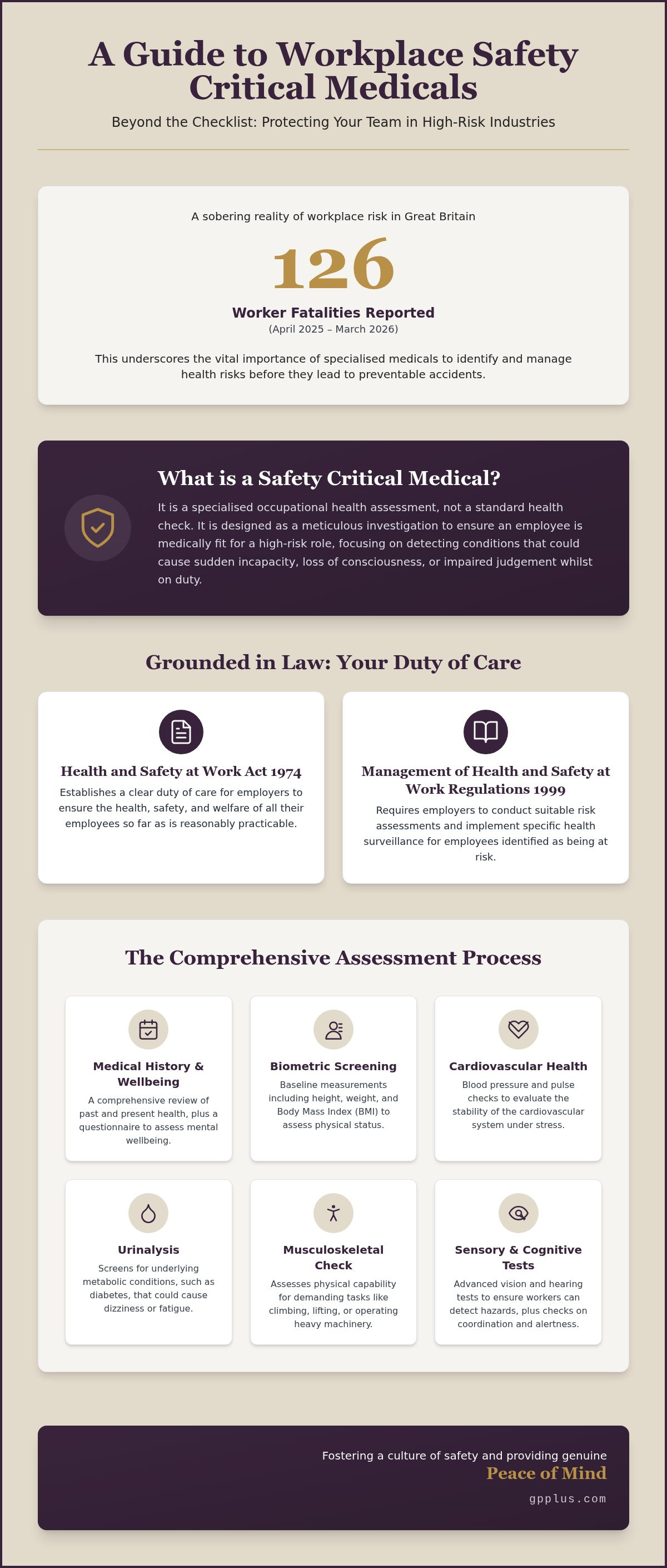
With 126 worker fatalities reported in Great Britain between April 2025 and March 2026, can any organisation truly afford to treat health assessments as a mere administrative hurdle? It is a sobering reality that underscores the vital importance of workplace safety critical medicals in high-risk sectors like construction and transport. You likely feel the weight of responsibility that comes with managing a workforce, alongside the persistent worry that a missed detail or a misunderstood regulation could lead to a preventable accident.
We understand that the path to compliance often feels clouded by shifting industry standards and the natural anxiety employees feel about their fitness to work. This guide promises to clear that confusion, offering a comprehensive look at the legal requirements and the specific clinical tests that safeguard your team. We shall examine the assessment process in detail, from cardiovascular health to hearing acuity, providing the clarity you need to ensure a smooth, professional experience that prioritises long-term wellbeing over simple checklists.
Key Takeaways
- Learn why these assessments are a vital clinical investigation rather than a simple administrative task, helping to identify risks like sudden incapacity before they occur.
- Understand the legal framework and industry standards for workplace safety critical medicals to ensure your organisation remains fully compliant with UK regulations.
- Discover the essential clinical components of an assessment, from biometric screening to mental wellbeing reviews, designed to protect your team’s long-term health.
- Find practical advice on preparing for an appointment, including necessary documentation, to ensure a smooth and reassuring experience for every employee.
- Explore how a meticulous, unhurried approach to occupational health fosters a culture of safety and provides genuine peace of mind for the entire workforce.
Understanding Safety Critical Medicals: Beyond the Compliance Checklist
A workplace safety critical medical is far more than a standard health check. It's a specialised occupational health assessment designed to ensure that individuals performing high-risk tasks possess the physiological and psychological resilience required for their roles. These assessments act as a meticulous investigation into an employee's wellbeing, specifically searching for underlying conditions that could lead to sudden incapacity or a loss of consciousness whilst on duty.
The primary objective is prevention. By identifying potential health risks early, we protect the individual from harm and safeguard their colleagues and the general public. In sectors like construction or transport, the consequences of a medical emergency can be catastrophic. Therefore, these medicals serve as a vital pillar of risk management, ensuring that safety is managed with extreme precision and patience.
The Legal Framework and Duty of Care
The foundation of these assessments lies in the Health and Safety at Work Act 1974. This legislation places a clear duty of care on employers to ensure the health and safety of all employees. This responsibility is further refined by the Management of Health and Safety at Work Regulations 1999, which requires employers to carry out suitable and sufficient risk assessments to identify those who require specific health surveillance.
Within the broader context of occupational safety and health, "safety critical" is a specific legal designation. It refers to activities where a worker's ill health could pose a significant risk to themselves or others. Meeting these standards isn't just about avoiding legal penalties; it's about fostering a culture of care where every team member feels heard and protected by clinical experts who value human connection as much as clinical data.
The Difference Between Standard and Safety Critical Medicals
Whilst a general GP consultation focuses on overall wellbeing, workplace safety critical medicals are bespoke and targeted. A standard medical might overlook subtle issues that become dangerous in a high-risk environment. For instance, a slight tremor or a minor balance issue might not impact office work, but it's a critical concern for someone operating a crane or working at height. These assessments focus on the specific physiological functions needed to maintain safety in demanding environments.
A thorough investigation typically examines several key areas:
- Visual Acuity and Perception: Ensuring the worker can see hazards clearly and distinguish colours in various conditions.
- Hearing and Auditory Awareness: Confirming they can hear alarms and verbal instructions over site noise.
- Alertness and Coordination: Verifying that no underlying condition or medication impairs their reaction times or balance.
By looking beyond the obvious, we provide a level of care that feels personal and exhaustive. This steady pace reflects a core philosophy of providing ample time for every interaction, ensuring no detail is overlooked in the pursuit of long-term safety and peace of mind.
The Clinical Components of a Safety Critical Assessment
During workplace safety critical medicals, the clinician acts as a meticulous investigator, looking beyond surface-level health to ensure every physiological system is robust enough for high-risk environments. This begins with a comprehensive medical history and mental wellbeing questionnaire. We take the time to listen, understanding that a patient’s narrative is just as vital as clinical data. This is followed by biometric screening, where we monitor height, weight, BMI, and blood pressure to assess cardiovascular stability. These measurements provide a baseline for understanding an individual's physical resilience.
A urinalysis is also performed to screen for underlying metabolic conditions such as diabetes. If left unmanaged, these conditions could lead to sudden dizziness or fatigue, posing a direct threat on a busy site. Musculoskeletal checks ensure that the physical demands of the role, such as climbing or operating heavy machinery, don't pose a risk to the individual’s long-term health or immediate safety.
Sensory and Cognitive Function Testing
Sensory acuity is non-negotiable for plant operators and drivers. We conduct advanced vision assessments, testing both distance and colour perception to ensure hazards are identified instantly. Audiometry is equally vital, detecting early-stage hearing loss that might be masked by noisy site conditions. For those on night shifts, we use the Epworth Sleepiness Scale to evaluate alertness, ensuring that fatigue doesn't compromise safety. This thoroughness is central to our occupational health services, where clinical authority meets patient-centred care.
Interpreting the Results: Fit, Unfit, or Restricted
The outcome of the assessment is delivered with clarity and professional calm. Whilst a 'Fit for Work' certificate is the goal, the process often reveals nuances that require a more tailored approach. The clinical framework for Fitness for Duty and Return to Work is not always binary. A 'Fit with Restrictions' result is often an excellent outcome for both the employer and employee. It suggests that with specific workplace adjustments, such as avoiding night shifts or limiting heavy lifting, the individual can continue to contribute safely without risking their wellbeing.
If someone is found 'Temporarily Unfit', we provide a clear clinical path for treatment and reassessment. This ensures they feel supported rather than sidelined, with a focus on recovery and a safe return to their duties. This methodical approach prioritises long-term outcomes and provides genuine peace of mind for the entire workforce, ensuring no detail is overlooked in the pursuit of safety.
Identifying Safety Critical Roles and Industry Standards
Determining which roles within an organisation require workplace safety critical medicals is a process that demands both clinical insight and a deep understanding of operational risks. A safety-critical role is one where a worker's sudden physical or mental impairment could lead to a significant incident, potentially endangering themselves, their colleagues, or the public. This definition is anchored in specific UK Government Safety Regulations, which outline the responsibilities of employers to manage these risks with extreme precision and care.
Commonly identified roles include plant operators and heavy machinery drivers, such as those operating forklift trucks or excavators. Similarly, personnel working at significant heights or within confined spaces must undergo these assessments to ensure they don't suffer from conditions like vertigo or claustrophobia that could prove fatal in such environments. We also extend this level of care to lone workers in remote locations; in these instances, the delay in emergency response times makes an individual’s health resilience even more vital. Specialised sectors like rail, requiring Personal Track Safety (PTS), and maritime operations also demand this level of investigative thoroughness to navigate their unique environmental hazards.
Construction and Infrastructure Requirements
In the construction sector, the standards set by organisations like Constructing Better Health (CBH) have become the benchmark for excellence. These standards ensure that everyone on a building site, from roadside utility workers to site managers, meets a unified health requirement. By implementing these rigorous workplace safety critical medicals, firms can actively support 'Zero Harm' initiatives. It isn't just about ticking a box; it’s about a meticulous investigation into health that ensures every person returns home safely at the end of their shift.
While health is paramount, maintaining site infrastructure is equally critical to 'Zero Harm' goals; for example, you can explore Blocked Drain Clearing with GA PERRY to see how professional maintenance prevents environmental hazards on-site.
Transport and Logistics Standards
For those in transport, the requirements often intersect with Group 2 standards for Large Goods Vehicle (LGV) and Passenger Carrying Vehicle (PCV) drivers. These roles place immense strain on cardiovascular health, especially during long-distance hauls where sedentary periods are prolonged. Our assessments look beyond the immediate requirements, exploring heart health and respiratory function to provide long-term peace of mind. We understand that for a driver, their health is their livelihood, so we approach every assessment with empathy and unhurried attentiveness.
Often, employers choose to include drug and alcohol screening as an adjunct to the medical. This provides an exhaustive view of a driver’s fitness for duty, ensuring that no detail is overlooked. By taking a methodical approach to these assessments, we act as a trusted advisor, helping logistics firms maintain the highest levels of safety whilst protecting the individual wellbeing of their drivers. This steady pace reflects our core philosophy of providing ample time for every interaction, ensuring your workforce is managed with precision and patience.
Preparing for the Appointment: A Guide for Employees
Entering a clinical environment for an assessment can sometimes feel daunting, particularly when your role depends on the outcome. We believe that the key to a successful experience lies in thorough preparation and a clear understanding of what to expect. Preparation is not merely about gathering paperwork; it's about creating the conditions for a clear, investigative solution to your health needs. Approaching workplace safety critical medicals with the right documentation and a calm mindset ensures that the assessment reflects your true health status, allowing our clinicians to act as your advocates in safety.
What to Bring to Your Medical
To ensure the process remains unhurried and comprehensive, we ask that you arrive with several key items. This allows our clinical experts to focus on the investigation rather than administrative delays. Please prepare the following:
- Official Photo Identification: A valid Passport or Driving Licence is essential for verifying your identity before the assessment begins.
- Medication Details: Please provide a complete list of current prescriptions, including dosages and the specific conditions they treat.
- Corrective Aids: If you use glasses, contact lenses, or hearing aids during your normal working duties, it's vital to bring them. Even if you usually wear contacts, having your glasses and a recent prescription is helpful for specific vision tests.
- Relevant Medical History: Any previous reports or letters from specialists regarding ongoing treatments can provide essential context for our clinical team.
Reducing Anxiety and Ensuring Accurate Results
Many employees feel a natural sense of apprehension about "passing" their medical. It's helpful to view this appointment not as an interrogation, but as a dedicated sanctuary of thoroughness where your wellbeing is the absolute priority. Our experienced GPs take the time to listen, ensuring you feel heard and protected throughout the session. We intentionally avoid a rushed atmosphere, allowing for a reflective pace that prioritises quality and human connection over speed.
To help us obtain the most accurate clinical data, we suggest a few simple steps. Avoid consuming caffeine or engaging in heavy physical exercise for at least an hour before your appointment, as these can temporarily elevate your blood pressure readings. Additionally, please ensure you are well-hydrated, as this is necessary for the urinalysis component used to screen for metabolic health markers. If you have any lingering concerns about specific tests, our team is always available to provide clarity and support. If you are ready to arrange your assessment, you can book your occupational health medical with our clinical experts today, ensuring a professional and exhaustive journey toward workplace safety.
The GP Plus Approach to Occupational Health Excellence
At GP Plus, we believe that workplace safety critical medicals deserve more than a cursory glance or a ticked box. Our philosophy is rooted in a profound sense of reassurance and professional calm, ensuring that every assessment is treated as a meticulous clinical investigation. By blending clinical authority with warm, patient-centred empathy, we've created a sanctuary of thoroughness where the expert guide takes the lead. We intentionally steer away from the sterile or rushed atmosphere often associated with corporate health, instead projecting an image of unhurried attentiveness that values the human connection as much as the clinical data.
Why Meticulous Investigation Matters
The value of an unhurried consultation cannot be overstated. Whilst many providers offer rapid-fire screenings, our commitment to longer appointment times allows our experienced GPs to detect subtle health indicators that might otherwise go unnoticed. This depth of investigation is essential when the stakes involve high-risk environments. A patient who feels heard is more likely to share the nuanced details of their health history, allowing for a more accurate and protective assessment.
Our approach to health screening is proactive rather than reactive. We don't just look for current fitness; we look toward long-term outcomes. This methodical pace ensures that no detail is overlooked, providing a level of care that feels both bespoke and exhaustive. It's this quiet confidence that allows us to act as a trusted medical advisor to organisations across the UK, ensuring their teams are not just compliant, but truly healthy.
Seamless Integration with Corporate Requirements
We understand that employers face significant pressure to meet health and safety compliance deadlines. Our role is to alleviate that stress by providing a smooth, professional experience that reduces employee anxiety whilst maintaining absolute clinical integrity. If a complex health need is identified during workplace safety critical medicals, we act as a dedicated partner, facilitating specialist referrals and providing clear, investigative solutions. This ensures a seamless transition from assessment to treatment where necessary.
Our commitment to excellence extends to our communication. We provide rapid turnaround for results and clear, jargon-free reports that allow management to make informed decisions with ease. By acting as a meticulous investigator and a vigilant expert, we provide the peace of mind that comes from knowing your workforce is being protected by the very best in clinical experience. We believe that when you take the time to explore health concerns fully, you create a narrative of safety that benefits everyone involved.
Prioritising the Long-Term Health of Your Workforce
Ensuring the safety of your team is a continuous journey that requires unhurried attentiveness and clinical expertise. We've explored how workplace safety critical medicals act as a vital investigative tool, moving beyond simple checklists to provide a sanctuary of thoroughness for your employees. By identifying potential health risks before they become incidents, you aren't just meeting legal requirements; you're fostering a workplace culture where every individual feels truly heard and protected.
Our commitment to meticulous clinical investigation ensures that no detail is overlooked, providing you with the clarity needed to manage high-risk roles with confidence. Whether it is sensory testing or cardiovascular screening, the focus remains on long-term outcomes and genuine peace of mind. You don't have to manage the complexities of compliance alone. Our expert-led consultations are designed to be a calm, professional experience that respects the human connection as much as the medical data. If you are ready to secure the wellbeing of your team in an unhurried, professional environment, you can Book a Safety Critical Medical with GP Plus today. Taking this step ensures your workforce is protected by vigilant experts who value precision and patient-centred care.
Frequently Asked Questions
How long does a safety critical medical appointment typically last?
An appointment typically lasts between 45 and 60 minutes, though we ensure the pace is never rushed. This timeframe allows our clinicians to conduct a meticulous investigation into every aspect of your health, from biometric screening to advanced sensory testing. We prioritise unhurried attentiveness, ensuring you have ample time to discuss any concerns in a calm and professional environment that values your wellbeing as much as the clinical data.
What happens if an employee fails their safety critical medical?
If an employee doesn't meet the immediate standards, it doesn't necessarily mean they cannot work. We often issue a "Fit with Restrictions" certificate, suggesting workplace adjustments to support the individual. If they are found "Temporarily Unfit", we provide a clear clinical path for treatment and future reassessment. Our goal is to act as a trusted advisor, finding solutions that protect both the workforce and the individual's long-term health.
How often should safety critical medicals be renewed?
Workplace safety critical medicals are typically renewed every one to three years, depending on the specific industry standards and the employee's age. For instance, workers over 54 often require more frequent assessments to ensure continued fitness for high-risk tasks. We recommend reviewing your specific industry guidelines, such as those from Constructing Better Health, to maintain full compliance with UK health and safety legislation and ensure ongoing peace of mind.
Is the information shared during a medical confidential from the employer?
Yes, the specific clinical details discussed during the consultation remain strictly confidential between the patient and the doctor. The employer only receives a certificate stating whether the individual is "Fit", "Unfit", or "Fit with Restrictions". We act as a vigilant expert protecting patient privacy, ensuring that personal health data is managed with extreme precision whilst providing the employer with the necessary assurance of workforce safety.
Can a safety critical medical be combined with drug and alcohol testing?
We can certainly combine these assessments with drug and alcohol screening to provide a more exhaustive view of an individual's fitness for duty. This integrated approach is common in transport and construction sectors, where total alertness is non-negotiable. By conducting these tests alongside the medical, we offer a comprehensive, investigative solution that streamlines your compliance process whilst maintaining a reassuring and professional atmosphere for your employees.
What specific vision standards must be met for a safety critical role?
Vision standards usually require a minimum acuity of 6/9 in the better eye and 6/12 in the other, with or without corrective lenses. We also assess peripheral vision and colour perception using Ishihara plates, which is vital for plant operators who must distinguish warning lights. Our clinical experts use specialised equipment to ensure these standards are met with precision, protecting the worker and the public from preventable hazards.
Are there specific requirements for employees working at heights?
Working at height requires specific investigations into balance, coordination, and cardiovascular stability. We meticulously screen for conditions like vertigo or epilepsy that could lead to sudden incapacity in a high-risk environment. These assessments ensure that the individual possesses the physical resilience required for the role, providing the employer with clinical authority and the employee with the confidence that they are protected whilst performing their duties.
How quickly will I receive the results of the medical assessment?
We pride ourselves on a rapid turnaround, typically providing the fitness certificate on the same day as the assessment. Our methodical approach doesn't come at the expense of efficiency; we understand the pressure to meet safety deadlines. Once the meticulous investigation is complete, we communicate the results clearly and promptly, ensuring a seamless experience that allows your organisation to maintain its commitment to workplace safety without unnecessary delays.


