

A private flu jab 2026 isn’t automatically the right choice simply because private vaccination is available. Your NHS eligibility, health circumstances and timing all matter. If you’re unsure whether you qualify for a funded vaccination or whether a private appointment better suits your needs, start by reviewing the current guidance and considering what you’d like from an appointment.
Choosing a route involves more than convenience. Eligibility and arrangements can differ across the UK, while vaccine suitability may depend on factors such as age and clinical risk. Protection takes around two weeks to develop, so timing matters too. A clinician can discuss questions about side effects or having a flu vaccine alongside a COVID-19 vaccine in light of your circumstances.
This guide explains how to compare NHS and private routes for 2026, who may consider private vaccination, and what to discuss about suitability, timing and having vaccinations together. It also covers appointment preparation and aftercare. GP Plus provides vaccinations as part of personalised private medical care, with longer appointments that give you time to ask questions and make an informed decision.
Key Takeaways
- Weigh a private flu jab 2026 against NHS vaccination, including eligibility and access arrangements that may vary across the UK.
- Age, health history, allergies and how you feel on the day can inform vaccination advice. Discuss relevant details with a clinician.
- Prepare for your appointment by noting your medicines, allergies and any previous reactions to vaccines.
- Consider timing, possible side effects and whether to have a flu jab alongside another vaccine.
- GP Plus offers longer appointments and personalised care, giving you time to discuss your questions as part of a considered vaccination appointment.
Private flu jab 2026: what the vaccination does and who may consider it
Whether to seek a private flu vaccination or use an NHS service depends on your circumstances, current guidance and clinical suitability. Start by checking your eligibility and thinking about the timing and appointment format that work for you.
A flu jab is a seasonal vaccination intended to reduce the risk of influenza. It does not treat flu once you’re infected. It helps prepare the body to recognise viruses targeted by the vaccine, but protection isn’t guaranteed and effectiveness can vary. Read more about how influenza vaccines work and how they are developed.
What does a seasonal flu jab aim to do?
Each year, health authorities review the influenza strains expected to circulate and update vaccine recommendations. For the 2026/2027 UK season, influenza vaccines are trivalent, meaning they’re designed to protect against three flu strains. UKHSA guidance informs the seasonal programme, but vaccination can’t guarantee that you won’t catch flu. Its aim is to reduce risk, not provide certainty.
A flu jab won’t treat an infection that’s already underway. If you feel unwell before your appointment, mention it when seeking clinical advice so your circumstances can be considered.
Who might consider a private flu jab in 2026?
Private vaccination is an option for people considering a flu jab outside an NHS programme. You might explore it if you’re not eligible for an NHS-funded vaccination or if a private appointment better suits your preferences. The payment route doesn’t determine clinical suitability: your health and current guidance still matter.
In the UK, NHS vaccination is offered to eligible groups, including people aged 65 and over, pregnant women and people with certain health conditions that increase their risk from flu. Eligibility and programme arrangements can differ across the UK and may change between seasons. Check the current NHS flu vaccine eligibility guidance for where you live before deciding which route to use.
If you’re considering a private flu jab 2026, a clinician can discuss your circumstances and answer questions about suitability. At GP Plus, vaccinations are part of personalised private medical care, with longer appointments that allow time for a considered conversation.
Flu jab suitability in 2026: clinical factors to discuss before vaccination
A flu jab appointment should take account of more than your age or whether you’ve had the vaccine before. Your health history, allergies, medicines and how you’re feeling on the day can all inform the discussion. Suitability is assessed individually, using your circumstances and current clinical guidance.
What health details should you raise before a flu jab?
Tell the clinician about relevant medical conditions, known allergies, medicines you take and any previous reactions to vaccines. Be clear if you’ve had a serious reaction, even if you’re unsure whether it was linked to a particular ingredient. Mention if you’re currently unwell, so the clinician can consider whether that affects your appointment.
This information helps the clinician assess your circumstances rather than assume that a general rule applies. Pregnancy, a weakened immune system or a long-term condition may prompt specific questions, but they don’t automatically lead to the same advice for everyone. You can also consult the CDC’s information on flu jab suitability for general vaccine benefits and considerations. For UK programme guidance, refer to the relevant NHS guidance and clinical advice.
How do flu vaccine types and recommendations differ?
For the 2026/2027 UK season, flu vaccines are trivalent, meaning they target three influenza strains. The available categories include injectable vaccines and a live attenuated nasal spray, which is used for most children. The appropriate type can depend on age and clinical circumstances, so don’t assume that a vaccine used by someone else will suit you.
Recommendations can change from one season to the next as expected circulating strains and official guidance are reviewed. A clinician can consider your details alongside current recommendations and explain the reasoning clearly. This can be particularly useful if you have a complex medical history, a previous vaccine reaction or uncertainty about an allergy. Don’t stop or alter prescribed medicines in preparation for vaccination. Share the details and discuss any concerns during your assessment.
If you’re considering a private flu jab 2026, preparing these details can make the discussion more useful and help you understand the options relevant to you. At GP Plus, longer appointments and personalised care leave time for questions about suitability. Read more about private vaccination care as you consider your next step.
Private or NHS flu jab in 2026: how to weigh your options
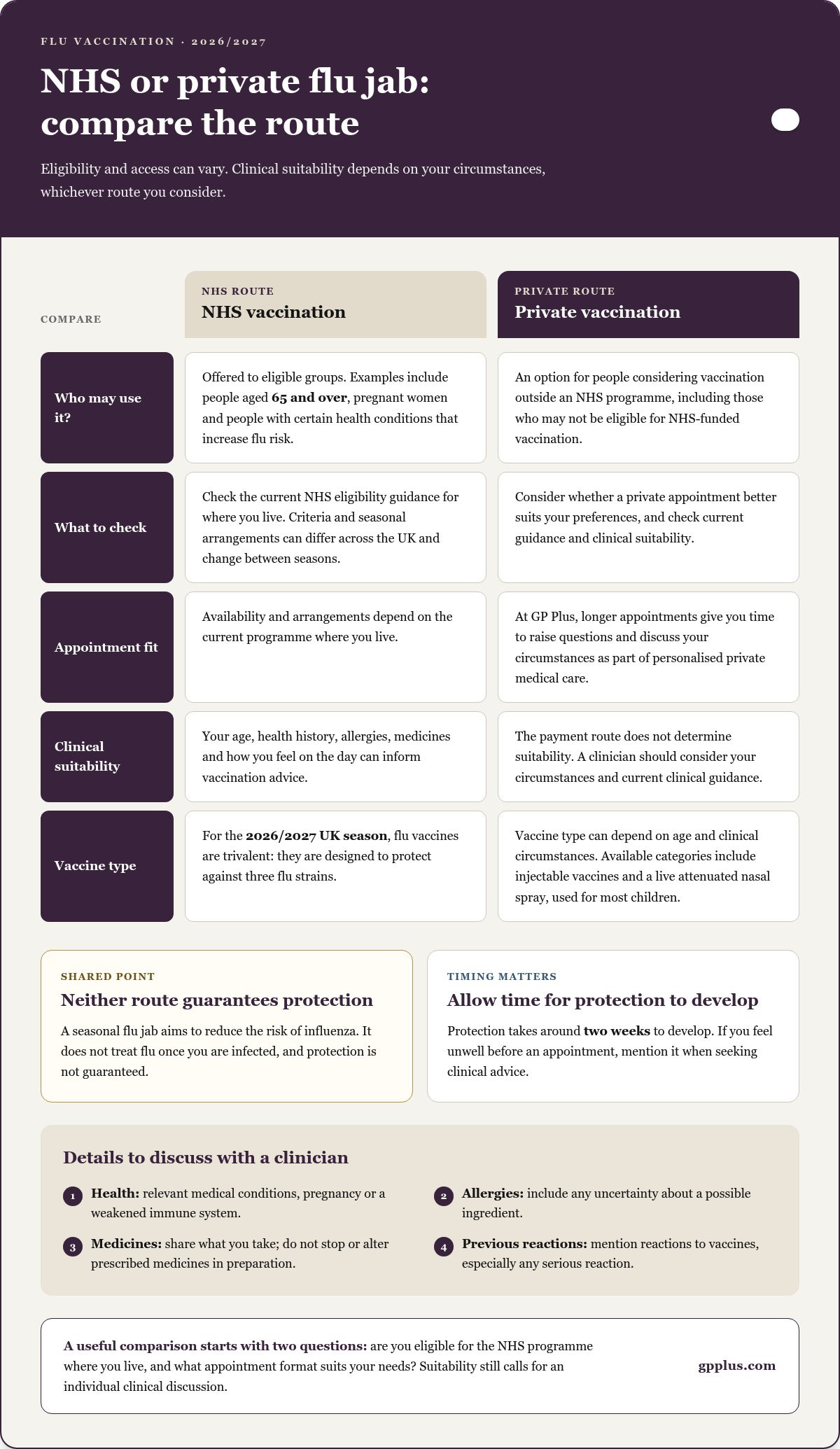
If you meet the current NHS criteria, NHS vaccination is a valid option. Private care is an alternative for people considering vaccination outside the programme. To compare the routes, check your eligibility, consider when each is available and decide whether you’d value an individual clinical discussion.
NHS eligibility and seasonal arrangements can vary across the UK and may change from one flu season to another. Check the NHS flu vaccine guidance and current guidance for where you live rather than assuming last year’s criteria still apply.
| Factor | NHS route | Private route |
|---|---|---|
| Eligibility | Available through the seasonal programme to people who meet the current criteria where they live. | An option to consider outside an NHS programme; clinical suitability still matters. |
| Route | Arranged through NHS vaccination services under the programme. | Booked as a private vaccination appointment. |
| Access | Timing and arrangements follow the local seasonal programme. | Access depends on the private service’s arrangements and seasonal availability. |
| Clinical discussion | Suitability is considered in line with programme guidance and your circumstances. | An appointment can include time to discuss individual questions and health considerations. |
When might the NHS route be appropriate?
If you meet the current criteria where you live, NHS vaccination may be an appropriate route. Eligibility doesn’t cover every adult, and criteria can differ across the UK. Review the latest guidance, especially if your circumstances have changed since the previous season. Choosing the NHS programme doesn’t mean you’re taking a lesser option.
What should you weigh when considering a private flu jab?
Consider whether you’re eligible for NHS vaccination, when each route is available and how you prefer to arrange an appointment. You may also value time to discuss your medical history, allergies or concerns with a clinician. Private vaccination isn’t automatically necessary if you qualify through the NHS, and paying privately doesn’t mean the jab provides better protection. Suitability and the vaccine offered should be considered in line with current clinical guidance.
If a private appointment feels appropriate for your circumstances, explore private vaccination care with GP Plus. Longer appointments and personalised care allow space for a considered conversation.
How to prepare for a private flu jab appointment in 2026
A little preparation can help the clinician consider your circumstances and make the appointment more useful. For a private flu jab 2026, review current guidance, gather relevant health information, discuss suitability at your appointment and follow the aftercare advice you’re given.
What should you do before the appointment?
Check the latest seasonal guidance for where you live, particularly if you’re unsure about NHS eligibility, timing or which type of vaccination may be suitable. Guidance and programme arrangements can vary across the UK and between seasons. Note down any questions you’d like to raise so you can cover them during the clinical discussion.
Have the following details ready:
- Relevant health conditions and any recent changes in your health.
- Medicines you take, including regular prescriptions.
- Known allergies, especially if you’re unsure whether they may affect vaccination.
- Any previous reaction to a vaccine, including what happened and when.
Tell the clinician if you feel unwell on the day or your health has changed since booking. This lets them assess your situation using current clinical guidance rather than assumptions. If you’re also planning a COVID-19 vaccination, mention it. Flu and COVID-19 vaccines can generally be given at the same time, although advice should reflect your circumstances and current guidance.
What can you expect after a flu jab?
Most people can continue with their usual routine, but temporary effects can occur. These may include soreness or tenderness where the injection was given, a mild temperature or aching muscles. Reactions vary and are generally short-lived. The NHS flu vaccine guidance explains common side effects and what to expect.
Protection doesn’t develop straight away. It takes around two weeks for the flu vaccine to become fully effective, so vaccination isn’t an immediate shield against infection. Follow the aftercare advice provided at your appointment, and seek appropriate medical advice if you experience symptoms that concern you or seem more severe than expected.
Bring your questions and health details to support a clear, considered appointment. Book a private flu vaccination appointment with GP Plus as part of personalised care.
Choosing a private flu jab with GP Plus: thoughtful care and clear next steps
Deciding whether to arrange a private flu vaccination is personal. Check current guidance for where you live, consider your health circumstances, compare NHS and private routes, then decide which option suits you. If you’re unsure, an individual clinical conversation can help you understand what questions to raise and which factors may affect suitability.
How does an individual clinical conversation support your decision?
A clinician can listen to your concerns and consider details such as your health history, allergies, medicines and previous vaccine reactions. This makes it possible to discuss your circumstances rather than rely on general assumptions. It can’t guarantee a particular vaccine or outcome, but it gives you the opportunity to ask questions and understand the clinical considerations.
GP Plus provides vaccinations within a private medical practice offering personalised care and longer appointments. Time for a considered conversation can be valuable if you’re weighing up your options, have questions about suitability or want to explain a concern without feeling rushed.
What are the next steps if you are considering a private flu jab?
Start by reviewing up-to-date NHS guidance and seasonal programme information for where you live. Eligibility and arrangements can vary across the UK and may change between seasons, so don’t rely only on what applied last year. Then consider your health history and what you’d like to discuss at an appointment.
If your questions relate to seasonal influenza protection, focus on flu vaccination guidance. Travel vaccinations address different health considerations linked to destinations and itineraries, so they’re a separate topic from a seasonal flu jab.
There’s no need to feel pressured. If an NHS route is right for you, it remains a valid option. If you’re considering private care, GP Plus provides vaccinations and a setting for a thoughtful discussion. Explore vaccination care at GP Plus to take your next step.
Make your flu vaccination choice with confidence
The right route for a flu jab depends on your circumstances, not simply on whether private care is available. Check current NHS eligibility guidance for where you live, then consider your health history, allergies, medicines and any previous vaccine reactions as part of a clinical discussion.
If you’re weighing up a private flu jab 2026, remember that NHS vaccination may be appropriate if you meet the current criteria. Private care is another option. Longer appointment times at GP Plus allow for a personalised conversation about your questions and relevant health details. Make your decision using current guidance and your individual circumstances, without assuming one route is right for everyone.
GP Plus provides vaccinations as part of its private medical services. Explore private vaccination care at GP Plus and arrange an appointment to discuss your questions as part of personalised care.
Frequently Asked Questions
Is a private flu jab worth it if I can receive an NHS vaccination?
It depends on your eligibility, circumstances and preferred route. If you qualify for an NHS vaccination, that may be an appropriate choice, and private vaccination isn’t automatically more effective. Weigh up access and timing, as well as whether you’d value an individual clinical discussion. Check the current programme rules for where you live, as eligibility and arrangements can change between seasons.
Can I have a private flu jab if I am eligible for an NHS one?
Being eligible for an NHS vaccination doesn’t by itself determine whether private vaccination is clinically suitable. A clinician can consider your health circumstances and discuss relevant options in line with current guidance. The NHS programme remains a valid route if you meet its criteria. As arrangements can differ across the UK and change by season, check the guidance for where you live before deciding which route is right for you.
When should I book a private flu jab in 2026?
Consider seasonal timing and current clinical advice. Flu vaccination is generally planned ahead of the period when influenza circulates more widely, but programme dates and arrangements can vary across the UK. For a private flu jab 2026, review the latest NHS or UKHSA guidance for where you live and discuss personal timing with a clinician, particularly if your health circumstances may affect the advice.
How long does a flu jab take to work?
Protection isn’t immediate. It takes around two weeks to develop after vaccination. The level of protection can vary, and a flu jab can’t guarantee that you won’t catch influenza. If you’re deciding when to book, allow time for the vaccine to take effect before flu circulates more widely, while following current seasonal advice. NHS or UKHSA guidance can help you understand the latest recommendations for the 2026 season.
Can I have flu and COVID-19 vaccines at the same appointment?
Flu and COVID-19 vaccines can generally be given at the same appointment, but advice should take account of current guidance, the vaccines involved and your circumstances. Tell the clinician if you’re planning both vaccinations and share relevant health information, including previous reactions or allergies. They can explain whether having them together is appropriate for you and what arrangements apply.
What side effects can happen after a flu jab?
Some people have a sore arm or mild, short-lived symptoms after vaccination, while others notice no effects. Reactions vary. Serious reactions are uncommon, but tell the clinician about relevant allergies or any previous serious vaccine reaction before your appointment. Follow the aftercare advice you’re given, and seek appropriate medical advice if symptoms concern you or seem more severe than expected. Current NHS or UKHSA guidance provides further information.
Does a flu jab guarantee I will not get flu?
No. A flu jab is intended to reduce the risk of influenza and its complications, but it can’t guarantee that you won’t catch flu, and protection varies between seasons and individuals. The viruses expected to circulate and vaccine recommendations can change, so consult current official guidance when considering vaccination in 2026. If you develop symptoms that concern you, seek appropriate medical advice rather than assuming vaccination rules out flu.


