

While one in four Britons reports suffering from an adverse reaction to food, data from the Food Standards Agency reveals that only a fraction have ever received a validated medical diagnosis. If you are searching for private allergy testing, you likely recognise the sheer exhaustion of unravelling sudden hives, chronic fatigue, or digestive discomfort alone. Living with unpredictable flare-ups is deeply isolating, especially when routine diagnostic waiting times stretch over months and mail-order sensitivity kits deliver little more than contradictory lists of foods to fear.
You deserve clear answers rather than speculative guesswork. True diagnostic clarity does not emerge from an isolated laboratory readout; it requires an attentive, comprehensive medical evaluation that views your history as a whole through a trusted provider like GP Plus. In this clinical guide, you will discover how to select clinically validated diagnostic investigations, cut through the noise of unregulated commercial intolerance tests, and distinguish genuine IgE-mediated risks from broader sensitivities. We will examine the exact criteria that separate robust medical assessments from commercial fads, providing you with a reliable framework to finally secure peace of mind.
Key Takeaways
- Distinguish between life-threatening IgE-mediated immune reactions and non-allergic metabolic food intolerances to identify your precise health risks.
- Discover why doctor-led diagnostic investigations, such as specific IgE blood panels and skin prick testing, offer clinical accuracy that commercial kits cannot match.
- Learn how to evaluate providers of private allergy testing edinburgh by prioritising comprehensive clinical assessments over quick, isolated test results.
- Uncover the clinical reality behind popular mail-order IgG sensitivity kits and unverified alternative tests that frequently cause unnecessary dietary restriction.
- Gain a structured, step-by-step pathway to prepare for your GP consultation, from symptom journaling to securing personalised, long-term dietary management.
Allergy Testing vs Food Intolerance Testing: Understanding the Diagnostic Differences
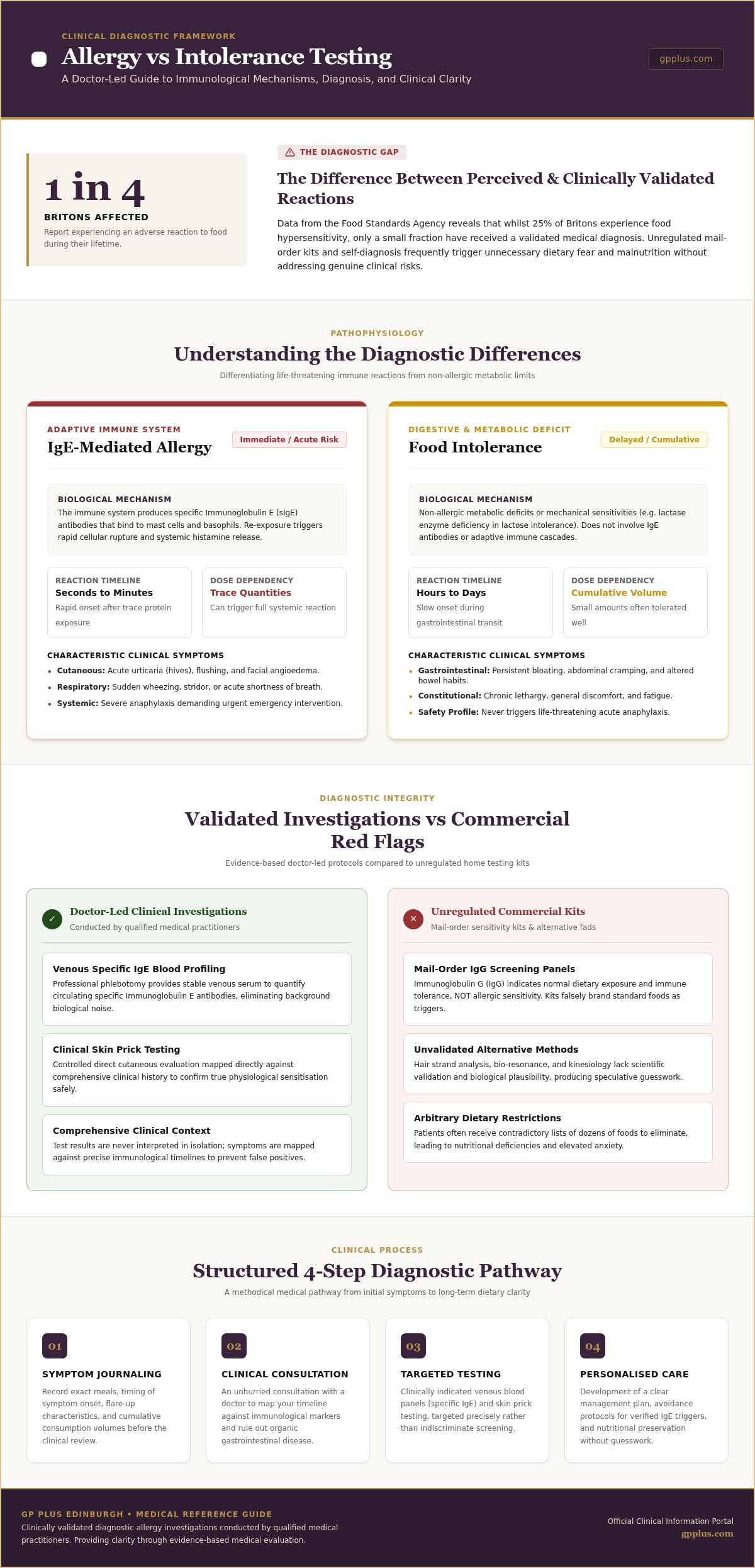
Experiencing an adverse reaction to what you eat or breathe can be alarming, but conflating an immune response with a digestive limitation leads to misdirected care. A genuine allergy involves the adaptive immune system, whereas a food intolerance stems primarily from metabolic deficits or mechanical sensitivities within the digestive tract. Distinguishing between the two is vital; mistaking an allergy for a mild sensitivity leaves you vulnerable to sudden systemic distress, whilst treating a benign intolerance as an allergy can prompt severe, unnecessary nutritional restrictions. Patients exploring private allergy testing edinburgh benefit most when their diagnostic journey begins with an unhurried clinical evaluation rather than assumption.
During an extended medical consultation, an experienced doctor takes the time to map your symptoms against immunological timelines. This careful assessment ensures you undergo targeted diagnostic investigations rather than undergoing arbitrary panels that produce confusing results.
Immunological Mechanisms: IgE-Mediated Allergies Explained
True allergies occur when your immune system erroneously identifies a harmless substance as an immediate threat. In classical IgE-mediated reactions, the body produces specific Immunoglobulin E antibodies that bind to mast cells and basophils. Upon re-exposure, these cells rapidly rupture, flooding the bloodstream with histamine and inflammatory mediators. Symptoms manifest swiftly, often within seconds or minutes of encountering trace protein amounts:
- Cutaneous flare-ups, including acute urticaria (hives), flushing, and facial angioedema
- Respiratory compromise, such as sudden wheezing, stridor, or acute shortness of breath
- Anaphylaxis, a life-threatening systemic collapse that demands urgent medical recognition and emergency care
Because of these rapid physiological cascades, validated diagnostic modalities like clinical skin prick testing and venous blood analysis are essential for pinpointing real sensitisation safely.
Non-Allergic Food Hypersensitivity and Intolerance Profiles
Food intolerances present an entirely distinct physiological profile. They do not involve IgE antibodies and never trigger acute anaphylaxis. Instead, they produce delayed, uncomfortable symptoms such as persistent bloating, abdominal cramping, altered bowel habits, and lethargy. These issues typically emerge hours or even days after eating.
Lactose intolerance is the classic example, caused by an insufficient supply of the lactase enzyme needed to break down milk sugars rather than an immunological attack against dairy proteins. Severity also hinges directly on the cumulative volume consumed; an individual might tolerate a splash of milk in tea without distress, yet suffer debilitating symptoms after a bowl of cream. Choosing comprehensive private allergy testing edinburgh ensures your symptoms are thoroughly assessed by a qualified clinician, identifying the physiological root cause so you can manage your daily diet with confidence.
Clinical Allergy Testing Modalities: Comparing Modern Diagnostic Investigations
Achieving diagnostic accuracy requires rigorous testing modalities matched precisely to your clinical background. Indiscriminate screening panels often uncover clinically irrelevant biological noise, creating confusion rather than clarity. In professional medical practice, evaluating genuine immunological sensitivity relies on two primary diagnostic investigations: laboratory-analysed venous blood profiling and direct cutaneous evaluation. Integrating these tests alongside a detailed medical history ensures that positive biomarkers reflect true physiological triggers rather than harmless background exposure, aligning with standard NHS guidance on food intolerance and allergic disease.
Venous Blood Profiling: Specific IgE and Component Testing
Venous blood tests quantify circulating specific Immunoglobulin E (sIgE) antibodies in serum. Obtaining blood via professional phlebotomy ensures a stable, haemolysis-free sample, which proves far more reliable than postal finger-prick collections that can degrade in transit. Modern blood analysis frequently utilises component-resolved diagnostics, evaluating individual molecular proteins rather than crude whole-food extracts.
This level of precision is transformative. For example, a patient sensitised to PR-10 proteins in birch pollen might test positive to apple on a crude extract panel due to pollen food allergy syndrome, which generally poses no risk of systemic collapse. Conversely, identifying antibodies to lipid transfer proteins (LTP) or peanut seed storage proteins (such as Ara h 2) flags a genuine, severe clinical risk. Venous profiling is also entirely unaffected by concurrent antihistamine therapy and remains the safest option for patients presenting with extensive eczema, severe dermatitis, or dermatographia.
Skin Prick Testing in Modern Clinical Practice
Skin prick testing introduces minute droplets of purified allergen extracts into the epidermis using a tiny lancet. Within fifteen to twenty minutes, cutaneous mast cells degranulate if specific IgE is bound to their surface, forming a quantifiable wheal and flare reaction measured against positive histamine and negative saline controls.
While rapid and highly informative, skin prick testing carries practical clinical considerations:
- Patients must discontinue oral antihistamines for at least 48 to 72 hours prior to evaluation to avoid suppressing cutaneous reactivity.
- The procedure introduces active foreign proteins into living tissue, carrying a minute risk of triggering systemic reactions.
- Testing must occur within a regulated clinical setting staffed by clinicians equipped with immediate resuscitation protocols.
Choosing doctor-led private allergy testing edinburgh guarantees that your diagnostic investigations are selected with purpose, protecting you from misinterpretation. If you are seeking clear, evidence-based answers for persistent symptoms, booking a dedicated GP consultation provides the thorough investigative space needed to assess your health safely.
How to Choose a Private Allergy Assessment: A Step-by-Step Buying Guide
Selecting an allergy evaluation should never feel like an impulsive purchase from an online shopping cart. True diagnostic precision demands a structured, step-by-step pathway that places your personal history ahead of generic testing panels. Self-selecting tests without clinical oversight frequently leads to misdirected investigations and unnecessary expense. By approaching private allergy testing edinburgh through a methodical, five-stage process, you ensure every clinical test has clear diagnostic intent:
- Document your daily patterns: Maintain a four-week diary logging food intake, environmental exposures, stress levels, and the precise timing of any flare-ups.
- Book a doctor-led consultation: Review your symptoms with an experienced medical practitioner who can evaluate your complete history without feeling rushed.
- Select targeted diagnostic investigations: Commission only the specific venous blood panels or skin tests justified by your documented symptom history, rather than broad, indiscriminate bundles.
- Interpret results collaboratively: Sit down with your physician to evaluate laboratory findings against real-world reactions, separating true sensitisations from incidental biological findings.
- Implement a monitored management plan: Execute a structured dietary adjustment or allergen reduction strategy under clinical supervision, complete with planned follow-ups to evaluate symptom resolution.
Essential Criteria When Evaluating Private Clinics
Before reserving an appointment, look closely at clinical governance and practice standards. Verify that the clinic provides extended appointment lengths so your physician has ample time to unravel intricate symptoms. Clinical safety also requires that all venous blood samples go to UKAS-accredited medical laboratories rather than commercial analysis facilities. Finally, confirm whether your doctor can arrange direct specialist referrals to consultant immunologists or gastroenterologists should your investigations reveal complex underlying pathology.
Preparing for Your Clinical Diagnostic Appointment
Maximising the value of your medical consultation requires careful preparation. Bring your completed four-week symptom journal, noting exact reaction intervals and severity scores. Compile a comprehensive inventory of all daily medications, over-the-counter remedies, and botanical supplements, as certain compounds can influence cutaneous reactivity.
Crucially, do not embark on severe dietary eliminations immediately before diagnostic testing. Established NICE clinical guidelines for food allergy assessment emphasise that ongoing exposure is necessary to maintain measurable circulating antibody levels; premature dietary restriction risks skewing test sensitivity and creating false-negative blood results. Taking these sensible preparatory steps guarantees that your experience with private allergy testing edinburgh delivers definitive answers and lasting clinical reassurance.
Commercial Pitfalls: Identifying Unregulated Home Kits and Red Flags
Direct-to-consumer health screening kits have flooded the wellness marketplace, heavily advertising convenient postal tests that promise to uncover dozens of food intolerances from a simple finger prick. Despite glossy brochures and persuasive marketing, these retail kits often rely on testing methods that lack scientific validation. Trusting unregulated assays frequently leads individuals down an exhausting path of unnecessary dietary restriction, heightened health anxiety, and nutritional deficiency. Patients evaluating private allergy testing edinburgh must understand the physiological limitations of these popular postal services.
The Fallacy of IgG Food Sensitivity Blood Kits
Most commercial food intolerance kits measure Immunoglobulin G (specifically IgG or IgG4) antibodies. While the sales literature positions elevated IgG levels as evidence of food toxicity or intolerance, contemporary immunology views this mechanism quite differently. IgG production is a normal, physiological indicator of immune exposure and immunological tolerance. When you frequently consume foods like eggs, wheat, or dairy, your immune system naturally produces IgG antibodies to signal that these proteins are harmless nutrients rather than invading pathogens.
Consequently, an IgG test does not diagnose disease. It merely produces a ledger of the foods you eat most often. Following these computer-generated red lists usually prompts people to cut out multiple nutrient-dense staples simultaneously, risking serious micronutrient deficiencies and disordered eating patterns without addressing the underlying clinical problem.
Warning Signs of Unreliable Diagnostic Providers
Major international allergy societies actively advise clinicians against using non-validated diagnostic assays. When evaluating external diagnostic providers, treat the following features as serious red flags:
- Universal sensitivity claims: Any vendor claiming that a single hair sample, saliva swab, or blood spot can accurately diagnose hundreds of diverse food sensitivities and environmental toxins simultaneously.
- Unscientific testing modalities: Services marketing bioresonance machines, applied kinesiology, electrodermal Vega testing, or hair mineral analysis. None of these modalities possess robust clinical evidence.
- Absence of medical consultation: Companies that dispatch automated, computer-generated results charts via email without offering an in-depth clinical consultation with a registered medical doctor to interpret the findings.
- Lack of accredited pathology: Facilities that fail to process biological samples within regulated, accredited laboratory environments.
Securing genuine diagnostic clarity requires an evidence-based approach led by an experienced clinician who evaluates your biomarkers in clinical context. Rather than wasting resources on unvalidated retail kits, book a comprehensive GP consultation to begin an authentic, medically rigorous investigation into your symptoms.
The Value of Doctor-Led Clinical Investigations and Personalised Management
Receiving a laboratory report should mark the beginning of clinical answers, not the end of medical care. Too often, commercial testing providers simply email a multi-page PDF of raw biomarkers, leaving patients to decipher ambiguous data without medical context. True diagnostic clarity relies on continuous clinical advocacy. Experienced physicians view your laboratory results as one piece of a broader diagnostic puzzle, integrating findings into wider proactive health screening protocols. This holistic framework ensures underlying inflammatory drivers, hormonal imbalances, and nutritional shortfalls are evaluated alongside immediate immune triggers, transforming private allergy testing edinburgh into an empowering medical partnership.
Comprehensive Clinical Assessments for Unresolved Symptoms
Unhurried appointments create the clinical space necessary to explore multifaceted complaints. Persistent urticaria, abdominal cramping, and brain fog rarely exist in isolation. During an extended consultation, your doctor investigates the broader biological terrain, evaluating gut barrier integrity, environmental exposures, and systemic stress markers.
This meticulous diagnostic process is essential for establishing accurate differential diagnoses. Non-allergic pathologies frequently mimic dietary hypersensitivities. Your physician carefully evaluates conditions such as coeliac disease, inflammatory bowel disorders, mast cell activation, and thyroid dysfunction before attributing symptoms solely to diet. Rather than leaving you to navigate conflicting theories alone, a dedicated general practitioner provides calm, vigilant guidance that keeps your long-term health protected.
Developing Safe, Sustainable Therapeutic Care Plans
Translating diagnostic findings into everyday life requires tailored, ongoing medical supervision. Eliminating suspected foods haphazardly can compromise nutritional status; a doctor-led elimination protocol systematically removes identified triggers while safeguarding essential macronutrient and micronutrient intake. Once inflammation subsides, foods are methodically reintroduced under planned observation to establish individual tolerance thresholds.
For patients diagnosed with genuine IgE-mediated allergies, structured medical management is life-saving:
- Physicians supply necessary private prescription services for high-dose non-sedating antihistamines and adrenaline auto-injectors.
- Clinicians provide thorough, practical training on device operation, ensuring you and your family recognise early anaphylactic prodromes.
- Doctors furnish personalised emergency action plans tailored for workplaces, travel, and schools.
- Practitioners schedule proactive follow-up reviews to reassess clinical markers, evaluate dietary expansion, and update medical documentation.
A successful outcome from private allergy testing edinburgh goes far beyond obtaining numbers on a laboratory sheet. It provides the lasting reassurance of an unhurried, expert clinician dedicated to restoring your daily comfort and vital peace of mind.
Reclaim Clarity and Control Over Your Everyday Health
Uncovering the root cause of chronic, disruptive reactions does not have to be an endless trial of elimination and guesswork. Commercial food sensitivity kits often generate more confusion than relief, mistaking normal immune exposure for disease. Lasting health requires distinguishing true IgE-mediated allergies from metabolic food intolerances through clinically validated diagnostic investigations. When you choose doctor-led private allergy testing edinburgh, you replace speculation with objective laboratory evidence interpreted within the full narrative of your personal medical history.
Founded in 1999 as a pioneering independent private general practice, GP Plus delivers extended, unhurried appointments dedicated to meticulous clinical investigation. Our experienced physicians ensure that every blood panel and skin assessment is purposeful, pairing accredited diagnostic analysis with bespoke dietary guidance and proactive medical care. You don't have to navigate unexplained symptoms in isolation; expert clinical advocacy is ready to support you.
Take the definitive first step toward lasting peace of mind. Book a Comprehensive Private Medical Consultation today to begin your journey toward precise answers, safe nutrition, and renewed well-being.
Frequently Asked Questions
What is the difference between an allergy and an intolerance?
An allergy involves an immediate immunological reaction, primarily mediated by IgE antibodies, which can trigger severe symptoms such as hives, swelling, or respiratory distress. In contrast, a food intolerance is a non-immunological digestive limitation, often caused by enzyme deficiencies like insufficient lactase. Intolerances cause uncomfortable gastrointestinal issues such as bloating and cramping, but they never cause life-threatening systemic collapse or sudden anaphylactic reactions.
Are postal food intolerance blood testing kits clinically accurate?
Postal kits measuring IgG or IgG4 antibodies are not clinically validated for diagnosing food intolerances. Immunologists recognise elevated IgG levels as an indicator of repeated dietary exposure and natural immunological tolerance, not illness. Relying on commercial mail-order sensitivity scores frequently leads to unjustified food exclusions and nutritional imbalances. Accurate diagnosis requires clinician-guided evaluation rather than direct-to-consumer printouts.
How should I prepare before attending a private allergy consultation?
Prepare for your appointment by keeping a four-week diary tracking meals, symptom onset, severity, and potential environmental exposures. Continue eating your normal diet, as eliminating foods prematurely can suppress antibody levels and compromise blood test accuracy. If you are scheduling private allergy testing edinburgh that includes skin prick assessments, consult your doctor beforehand about pausing oral antihistamines for several days so your cutaneous responses remain fully measurable.
Can adult-onset allergies develop suddenly without any previous symptoms?
Adult-onset allergies can emerge suddenly, even towards foods or environmental allergens you have tolerated safely for decades. Clinical research indicates that approximately half of all adult food allergies develop during maturity. Changes in immune regulation, hormonal shifts, environmental exposures, or cross-reactivity from newly acquired pollen sensitisations can suddenly prompt your immune system to treat previously harmless proteins as hostile foreign threats.
Will private medical insurance cover diagnostic allergy testing investigations?
Coverage depends entirely on your specific insurer and underlying policy schedule. Many private health insurance plans cover specialist-led diagnostic investigations and outpatient blood profiling when referred by a general practitioner, particularly if severe symptoms or anaphylaxis risks are present. However, standard policies rarely cover routine food sensitivity screenings or non-IgE intolerance checks, so it's always advisable to obtain pre-authorisation from your insurer beforehand.
How quickly can I expect to receive my laboratory test results?
Most venous blood test results from accredited UK laboratories are completed within two to five working days, depending on the complexity of the panel. When undertaking private allergy testing edinburgh, your doctor reviews the detailed biochemical breakdown before discussing the findings with you in a dedicated follow-up consultation. This step ensures that isolated lab numbers are interpreted correctly within the narrative of your real-world clinical history.
Can a private general practitioner prescribe emergency adrenaline auto-injectors?
Yes, a registered private general practitioner can prescribe adrenaline auto-injectors whenever clinical evaluation indicates a genuine risk of IgE-mediated anaphylaxis. Alongside issuing private prescriptions for devices like EpiPen or Jext, your doctor will demonstrate practical injection techniques, explain early warning signs of systemic reactions, and formulate a personalised emergency action plan to keep you safe at home, work, and during travel.


