

What if the most powerful diagnostic tool in modern medicine wasn't a piece of high-tech equipment, but the simple, unhurried gift of time? For many, the standard ten-minute consultation feels like a race against a ticking clock, leaving complex symptoms partially explained and deeper anxieties unaddressed. It's exhausting to feel like a data point in a busy system rather than an individual seeking clarity and care. You deserve to feel heard, protected, and advocated for by a medical expert who values the human connection as much as clinical data.
This commitment to person-centred advocacy is shared by Steel City General Practice, a provider that prioritises a holistic approach to patient health and well-being.
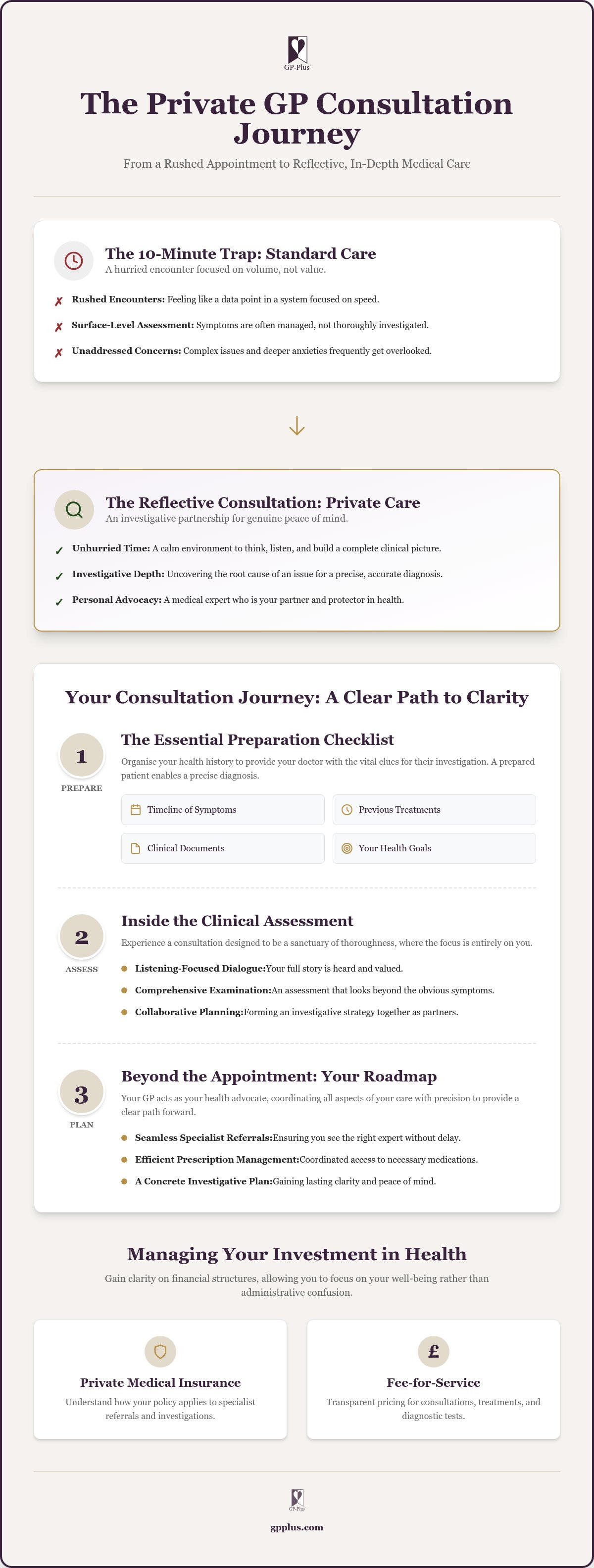
This guide explains precisely what to expect at a private gp appointment, highlighting how an investigative, patient-centred approach differs from the rushed atmosphere of traditional settings. You'll discover how to prepare for your consultation using our comprehensive checklist, ensuring every health concern is explored with meticulous detail. We will also clarify how to navigate private insurance for specialist referrals and prescriptions, providing a clear roadmap toward a concrete investigative plan and, ultimately, lasting peace of mind.
Key Takeaways
- Learn how transitioning from a rushed ten-minute slot to a reflective, unhurried consultation allows for a more precise clinical diagnosis and genuine peace of mind.
- Use our detailed preparation checklist to organise your symptom history and previous treatments, ensuring every concern is heard and documented by your medical expert.
- Discover exactly what to expect private gp appointment, including the listening-focused initial dialogue and a comprehensive physical assessment that looks beyond your immediate symptoms.
- Understand the seamless process of securing private specialist referrals and managing prescriptions, providing a clear roadmap for your investigative journey.
- Gain clarity on how to navigate private medical insurance and fee-for-service structures, allowing you to focus on your health rather than administrative confusion.
Why Choose a Private GP? Transitioning from Rushed to Reflective Care
Traditional primary care has increasingly become a series of brief encounters, often referred to as the "10-minute trap." In these short windows, patients frequently feel they're participating in a race against a ticking clock. When you consider what to expect private gp appointment, the most striking difference is the transition from this hurried pace to a model of reflective care. It's a shift that moves away from the "gatekeeper" mentality, where the goal is often to manage high volumes of patients, toward a system where the doctor acts as a dedicated medical investigator. This is particularly vital for those managing complex symptoms or chronic conditions that don't fit neatly into a standard slot.
Reflective care isn't just a luxury; it's a clinical necessity for accuracy. When a doctor has the space to think, listen, and cross-reference details, the likelihood of a precise diagnosis increases significantly. It allows for a level of investigative depth that uncovers the root cause of an issue rather than merely suppressing the immediate symptoms. For a patient, this means moving from a state of confusion to one of clinical clarity.
The Clinical Value of Time
The primary benefit of an extended consultation is the ability to conduct a truly exhaustive review of your medical history. Beyond your current symptoms, your GP can explore lifestyle factors, sleep patterns, and family history that might have been overlooked in a more restricted setting. This thoroughness naturally reduces the need for multiple follow-up visits, as more ground is covered in a single session. It's a methodical approach that respects the complexity of the human body.
There's also a profound psychological advantage to this unhurried pace. Feeling heard and understood by a medical expert provides an immediate sense of reassurance. Anxiety often stems from the unknown; by taking the time to explain the "why" behind your health plan, your GP offers a level of advocacy that ensures you never feel like you're navigating your journey alone. It's about being a partner in your own health rather than just a recipient of a prescription.
A Sanctuary of Thoroughness
Modern medical settings can often feel sterile and transactional. A private GP clinic, however, is designed to be a sanctuary of thoroughness. It's a calm, patient-centred environment where the focus remains entirely on your well-being. In this setting, your doctor takes the lead as a vigilant protector of your health, managing every referral and investigation with extreme precision. You aren't just another name on a list; you're a person whose health deserves dedicated, specialist attention.
This advocacy model means your GP doesn't just see you for a one-off issue but oversees your entire health narrative. They coordinate your care, ensuring that specialist referrals are seamless and that your medical data is interpreted with your specific context in mind. Ultimately, unhurried care is the cornerstone of premium private medicine, ensuring that no detail, however small, is ever overlooked in the pursuit of long-term health outcomes.
Ensuring this level of precision often involves expert administrative support; you can visit ClicFone to learn how professional medical secretarial services help practitioners manage their patient communications effectively.
The Essential Preparation Checklist: How to Organise Your Health History
Preparation is the foundation of high-quality, bespoke care. It ensures that when you arrive, the focus remains entirely on your well-being rather than administrative data entry. Understanding what to expect private gp appointment starts with recognising that you're the primary source of information for your clinical investigation. By documenting your "symptom story" with precision, you provide the essential clues your doctor needs to begin their work as a meticulous investigator.
Start by creating a clear timeline of your health journey. Note when symptoms first appeared, what specific triggers you've identified, and which previous treatments provided relief or failed to help. Next, gather your clinical paper trail. Whilst your GP will conduct their own assessment, having past blood results or specialist letters allows for a more comprehensive comparison. Finally, clarify your goals. Whether you're seeking a second opinion or a concrete investigative plan for a new concern, knowing what a "successful visit" looks like for you helps your doctor advocate for your needs more effectively.
Checklist: What to Bring to Your Appointment
- A comprehensive list of all current medications, including precise dosages and any over-the-counter supplements or vitamins.
- Relevant family medical history that might inform preventative screenings or highlight genetic predispositions.
- Any recent blood test results, imaging reports, or discharge summaries from other healthcare providers.
Organising Your Concerns
If you're managing multiple health issues, it's helpful to prioritise them before you arrive. Focus on the most pressing concern first to ensure it receives the deepest level of unhurried investigation. To describe physical discomfort accurately, you might use the SOCRATES method. This involves noting the Site, Onset, Character, and any factors that make the sensation better or worse. This structured approach provides a common language between you and your medical advisor, leading to faster clarity.
It's also a wise idea to note down your favourite health questions to ask the doctor so that no detail is forgotten during the dialogue. When you book a private GP consultation, this level of preparation ensures that every minute of your appointment is used to its full potential. Knowing what to expect private gp appointment involves more than just showing up; it's about becoming an active partner in a process that values thoroughness and individual detail over speed.
Inside the Consultation: What to Expect During Your Clinical Assessment
Once you enter the consulting room, the atmosphere shifts from the functional waiting area to a private sanctuary of focused attention. Understanding what to expect private gp appointment involves recognising that the clock is no longer your enemy. The first fifteen minutes are often dedicated solely to dialogue. Your GP isn't just checking boxes; they're listening to the nuances of your story. This deep listening phase allows them to capture details that might be dismissed in a standard ten-minute slot, forming the basis of a truly meticulous investigation into your well-being.
Following this conversation, a comprehensive physical examination takes place. Unlike a standard visit that focuses only on the immediate symptom, your private GP looks at your health holistically. If your concern requires immediate data, the clinic provides access to sophisticated diagnostic investigations. This might include on-site ECGs to monitor heart health or detailed blood profiles that offer a window into your internal biochemistry. The goal is to move from speculation to clinical certainty within the same session where possible, providing you with immediate answers.
The Investigative Partnership
This process marks your transition from a passive recipient of care to an active partner in the decision-making process. Your doctor combines their years of clinical intuition with the hard data from your tests to build a narrative of your health. Together, you'll establish a collaborative care plan. These bespoke plans aren't generic templates; they're tailored to your specific lifestyle, professional demands, and personal recovery goals. This ensures the timeline for your return to health is both realistic and supported by a medical advocate who understands your unique context.
Specialised Medical Treatments
Beyond general consultations, the clinical assessment may encompass specialised medical treatments. Whether you're attending for travel vaccinations, a comprehensive health screening, or a formal occupational health assessment, the level of detail remains exhaustive. These examinations differ significantly from a standard "sick note" visit because they prioritise preventative vigilance. By using high-quality diagnostic equipment for immediate insights, your GP ensures that every assessment is thorough. Knowing what to expect private gp appointment means expecting a level of depth that ensures you leave the clinic with a profound sense of clarity and clinical protection.
Beyond the Appointment: Understanding Referrals and Diagnostic Investigations
The conclusion of your physical consultation is merely the beginning of a coordinated investigative journey. When considering what to expect private gp appointment, it's vital to understand that your doctor remains your central advocate long after you leave the clinic. They act as a meticulous hub, synthesising data from various sources to ensure no detail is lost in the transition between primary and secondary care. This ongoing vigilance is what transforms a simple visit into a comprehensive health strategy.
Your GP doesn't just provide a diagnosis; they manage the entire narrative of your recovery. This involves a commitment to follow-through that ensures every test result is interpreted within the context of your unique history. Whether it's a minor adjustment to a care plan or the coordination of complex specialist input, the focus remains on achieving clinical clarity and long-term peace of mind. The relationship is built on a foundation of trust, where you're protected by an expert who values the human connection as much as the data.
Navigating the Referral Path
If your assessment indicates a need for deeper specialist insight, your GP will facilitate a seamless referral process. You can receive a formal letter for a specific consultant of your choice or opt for an "open referral." This latter option provides flexibility, allowing you to select a specialist based on your insurance provider's approved list or a specific location. Your GP ensures that all relevant clinical data and previous investigation results are transferred securely, providing the consultant with a thorough foundation for their own assessment. By acting as the central hub for this information, your GP prevents the fragmentation of care that often occurs in busier systems.
Prescriptions and Follow-ups
Managing your treatment plan often involves private prescriptions. It's helpful to know that private prescriptions are charged at the pharmacy’s market rate for the medication, rather than a flat standard fee. This often allows for access to specialised treatments or specific formulations that are precisely tailored to your needs. Your GP will explain the rationale behind each prescription, ensuring you feel confident in the chosen path.
The "looping back" process is where the true value of a private medical advisor becomes clear. Once diagnostic results or consultant letters arrive, your GP will arrange a follow-up to interpret this information for you. They don't just relay data; they translate it into a clear, actionable plan. This long-term monitoring ensures that your care plan is adjusted as new evidence emerges, maintaining a focus on your sustained well-being. If you're ready to experience this level of dedicated advocacy, you can book a private GP consultation to begin your investigative journey today.
Managing Your Investment: Private GP Insurance and Fee Structures
Choosing to access private healthcare is a deliberate investment in clinical clarity and personal advocacy. Unlike traditional models where time is a constrained resource, the private sector operates on a fee-for-service basis. This means you're investing in the doctor's unhurried expertise and the meticulous investigation required to uncover the root cause of your concerns. Whilst understanding what to expect private gp appointment involves preparing your medical history, it also requires clarity on how these services are funded. Many patients opt for the "self-pay" route, valuing the ability to bypass waiting lists and secure immediate, definitive answers for their health concerns.
Justifying the cost of a consultation becomes simpler when you compare it to the value of long-term health outcomes. A single, exhaustive session that results in a concrete investigative plan can prevent months of uncertainty and multiple follow-up visits. It's a proactive approach that prioritises precision over speed, ensuring that your health is managed with the level of detail it deserves. By choosing this path, you're securing a trusted medical advisor who remains committed to your well-being long after the initial dialogue concludes.
How Private GP Insurance Works
Navigating the world of Private Medical Insurance (PMI) can sometimes feel complex. It's a common misconception that all policies automatically cover primary care. Whilst many PMI plans are designed to cover specialist consultant fees and diagnostic tests, GP visits are often treated as "add-ons" or require self-funding. Before you attend, it's a wise idea to check your specific policy wording for terms like "GP consultation" or "primary care coverage."
If your policy does allow for reimbursement, our administrative team can provide a detailed, itemised receipt to facilitate your claim. This document ensures your provider has the necessary clinical codes and fee breakdowns to process your request efficiently. Transparency in these transactions is part of the professional calm we aim to provide, allowing you to focus entirely on your recovery rather than administrative hurdles.
Fixed-Price Assessments vs. Consultations
It's helpful to distinguish between a time-based what to expect private gp appointment and a fixed-price medical assessment. Standard consultations are flexible, allowing the doctor to follow the evidence wherever it leads. In contrast, services such as visa medicals, driving assessments, or occupational health screenings are structured around specific regulatory requirements. These assessments are often offered at a fixed rate because they follow a predetermined clinical protocol.
Similarly, comprehensive health screening packages offer a cost-effective way to receive a "full body MOT." These bundles often include a suite of blood profiles and physical checks designed to detect issues before they become symptomatic. Viewing these services as a proactive investment in your future well-being allows you to take control of your health narrative. Ultimately, whether you're seeking a second opinion or a routine check-up, the goal remains the same: providing a sanctuary of thoroughness where no detail is overlooked.
Secure Your Path to Clinical Clarity
Navigating your health journey requires more than just a quick diagnosis; it demands a partnership built on time, detail, and expert advocacy. Understanding what to expect private gp appointment allows you to approach your consultation with a sense of calm and readiness, knowing that your concerns will be met with unhurried attentiveness. You now have the tools to organise your clinical history and the insight to navigate insurance and referrals with confidence, ensuring you remain the focus of every clinical decision.
At GP Plus, we've championed this meticulous approach since 1999 as Scotland’s first private GP clinic. Led by Dr Peter Copp, our team prioritises longer appointment times to ensure no symptom is overlooked and every patient feels truly heard. We act as your dedicated medical investigators, bridging the gap between initial concern and a concrete, long-term health plan. Your well-being deserves the sanctuary of thoroughness that only unhurried, expert care can provide.
Book your unhurried private GP consultation at GP Plus today and rediscover the peace of mind that comes from being protected by a vigilant medical advisor who values your health as much as you do.
Frequently Asked Questions
Does private GP insurance cover the cost of my appointment?
Coverage depends entirely on your specific policy wording. Whilst many private medical insurance plans cover specialist fees and diagnostic investigations, standard GP consultations are often excluded or require a specific primary care add-on. We suggest contacting your provider directly to clarify your level of cover. We can provide detailed receipts to help you facilitate a claim if your policy allows for reimbursement of primary care costs.
Do I need to be registered with an NHS GP to see a private doctor?
You don't need to be registered with an NHS GP to access our services. Private medical care operates independently, allowing you to book a consultation regardless of your current healthcare status. This flexibility is ideal for international visitors or those who haven't yet settled with a local practice. Your private doctor acts as a standalone advisor, providing the same level of meticulous investigation whether you have an NHS record or not.
Will a private GP have access to my previous medical records?
Private GPs do not have automatic access to your NHS medical records due to data privacy regulations. This is why knowing what to expect private gp appointment involves preparing your own clinical history before you arrive. Bringing a summary of past results or a list of current medications ensures your doctor has the necessary context. We build your new private record from the ground up, focusing on the specific details of your current health journey.
Can a private GP refer me back to the NHS for treatment?
A private GP can provide a detailed letter for your NHS doctor to facilitate your return to the public system. Whilst we specialise in direct specialist referrals within the private sector, we understand that some patients prefer NHS treatment for long-term management. We act as your advocate, providing a clinical summary that your NHS GP can use to understand the investigative steps we've already taken on your behalf.
How long does a typical private medical consultation last?
A typical consultation lasts between 30 and 60 minutes, which is significantly longer than the standard ten-minute slots found in many modern clinics. This extended time is the cornerstone of our reflective care model. It allows your doctor to move beyond surface-level symptoms and conduct a thorough investigation into your well-being. You'll never feel rushed, as the unhurried pace is designed to ensure no clinical detail is overlooked.
What happens if I need a prescription after my private appointment?
If you require medication, your doctor will issue a private prescription that you can take to any pharmacy. Unlike standard flat-rate charges, you'll pay the pharmacy’s market price for the specific drug. This often provides access to a wider range of specialised treatments precisely tailored to your needs. We can also coordinate with our administrative team to manage repeat prescriptions if your bespoke care plan requires long-term medication monitoring.
Are diagnostic tests like blood work included in the consultation fee?
Diagnostic tests such as blood work, ECGs, or imaging are not included in the initial consultation fee. The fee covers the doctor’s time, expertise, and the depth of the clinical assessment itself. Any necessary investigations are charged separately, and your GP will always discuss the costs and rationale with you beforehand. This transparency ensures you remain in control of your health investment whilst pursuing the most accurate diagnostic path.
Can I see a private GP for a second opinion on an existing diagnosis?
Seeking a second opinion is a very common reason for booking a consultation. When considering what to expect private gp appointment, you should anticipate a deep dive into your existing diagnosis and treatment history. Our doctors act as meticulous investigators, reviewing your symptoms with fresh eyes and clinical intuition. This process often provides the clarity and reassurance needed to feel confident in your long-term health strategy and recovery plan.


